
Dissolved air flotation, usually called DAF, is one of the most widely used pretreatment technologies for industrial wastewater streams that contain fats, oils, grease, suspended solids, light floc, or low-density particles. It can protect biological treatment, reduce downstream solids loading, recover surface sludge, and stabilize effluent quality when it is designed and commissioned correctly.
DAF is not simply a stainless tank with a scraper. Its performance depends on wastewater characterization, coagulation, flocculation, microbubble generation, hydraulic loading, recycle ratio, sludge removal, chemical control, and operator response. In EPC projects, DAF problems often come from weak upstream data, poor chemical conditioning, undersized sludge handling, or treating the saturation system as a small accessory instead of a core process package.
What DAF Is Designed to Remove
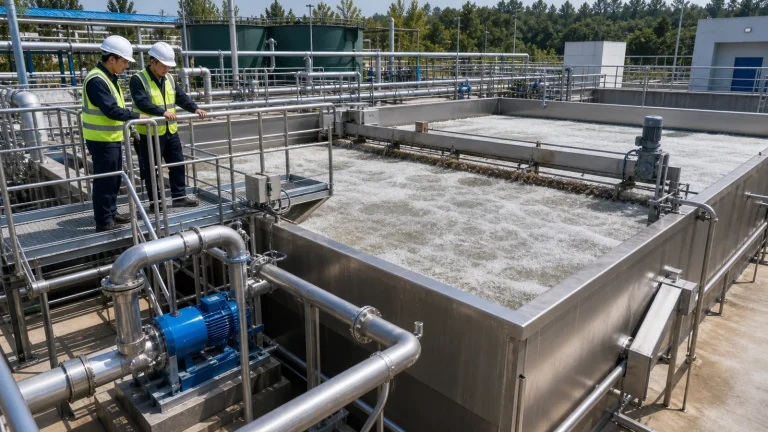
DAF works by attaching fine air bubbles to particles so they rise to the surface and form a floated sludge layer. The system is commonly used for food and beverage wastewater, dairy wastewater, meat processing, rendering, oil-containing wastewater, metalworking fluids, petrochemical pretreatment, pulp and paper streams, and other industrial flows where solids or oil are easier to float than settle.
The best candidates are wastewater streams where the target contaminants can be destabilized, flocculated, and floated. DAF may remove suspended solids, oil and grease, some emulsified oil after chemical conditioning, phosphorus associated with chemical precipitates, and a portion of COD or BOD tied to particulate or floatable material. It is less effective for truly dissolved pollutants that do not form floatable solids.
1. Start With Wastewater Suitability
Before selecting a DAF unit, the project team should review flow variation, suspended solids, oil and grease, COD, BOD, pH, temperature, salinity, surfactants, emulsions, density of solids, particle size, and expected chemical response. A jar test or pilot test is often more valuable than a generic design table because industrial wastewater can behave differently from one facility to another.
Surfactants and stable emulsions are especially important. A wastewater stream may contain oil, but that does not mean the oil will float easily. If cleaning chemicals, detergents, emulsifiers, high temperature, or strong mixing create stable emulsions, chemical conditioning may be required before flotation becomes effective.
2. Equalization Improves DAF Stability
DAF systems prefer reasonably stable flow and pollutant loading. Sudden high-flow peaks, high-oil slugs, acidic cleaning dumps, alkaline washdowns, hot wastewater, or heavy solids pulses can overwhelm chemical dosing and flotation balance. This is why DAF is often paired with an upstream equalization tank.
The link between equalization and DAF should be designed intentionally. A well-controlled feed from an industrial wastewater equalization tank can improve chemical dosing, floc formation, hydraulic loading, and sludge removal. Without equalization, operators may spend most of their time chasing changes that should have been buffered earlier in the process.
3. Coagulation and Flocculation Are Central to Performance
DAF performance often depends more on chemical conditioning than on tank appearance. Coagulants such as metal salts or other project-specific chemistries may be used to destabilize particles or emulsions. Polymers can help form stronger floc that attaches to bubbles and rises to the surface without breaking apart.
The mixing sequence matters. Coagulant usually requires rapid and complete contact, while polymer normally needs gentler mixing to avoid damaging floc. If chemicals are injected too close to the DAF inlet, if pipe mixing is too weak, or if flocculation time is too short, the flotation tank may receive poorly formed particles that do not float reliably.
Chemical dose should be based on testing and adjusted during operation. Overdosing can increase cost, create excessive sludge, reduce effluent quality, or interfere with downstream biological treatment. Underdosing can leave oil, solids, and colloids in the water.
4. Microbubble Generation Is the Heart of DAF
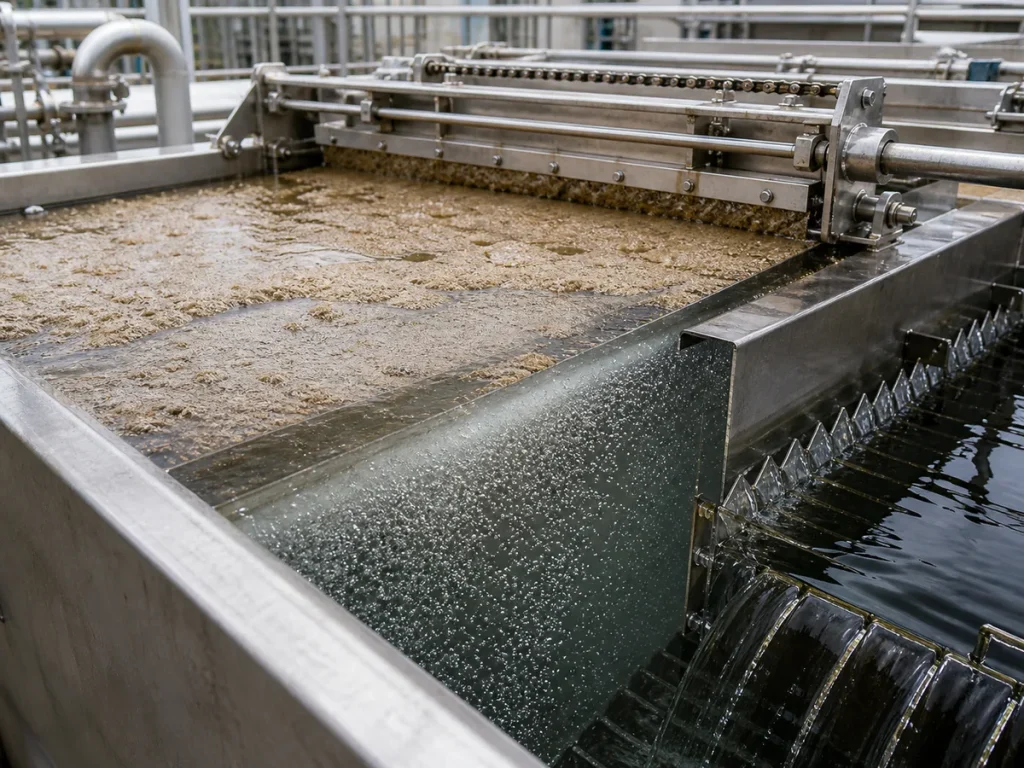
DAF uses pressurized recycle water saturated with air. When the pressure is released into the flotation tank, fine bubbles form and attach to conditioned particles. The bubble size, recycle ratio, saturation pressure, air dissolution efficiency, release arrangement, and mixing energy all affect removal performance.
If bubbles are too large, they rise quickly and may not attach well. If the recycle flow is too low, there may not be enough bubble surface area. If the release point creates too much turbulence, floc can break. If the saturator or air control is unstable, flotation results can change even when influent quality is steady.
5. Hydraulic Loading and Retention Time Must Be Realistic
DAF tanks have limits for hydraulic loading and solids loading. Pushing too much flow through a small unit can reduce separation time, increase carryover, disturb the sludge blanket, and overload skimmers. A design based only on average daily flow may fail during production peaks or cleaning cycles.
The design should review average flow, peak flow, recycle flow, solids loading, oil loading, chemical sludge production, and future expansion. In some projects, parallel DAF units or flow splitting may provide better operating flexibility than one unit sized near its maximum condition.
6. Sludge Handling Is Not a Minor Detail
DAF sludge can be wet, sticky, oily, odorous, or chemically conditioned. It may have a higher solids concentration than some clarifier sludge, but it still requires proper collection, pumping, storage, dewatering, and disposal planning. Underestimating sludge volume is one of the most common DAF project mistakes.
The skimmer mechanism should remove floated sludge consistently without pushing too much water into the sludge hopper. The sludge hopper, transfer pump, pipes, valves, and storage tank should be designed for the actual sludge characteristics. If oil and grease are high, heating, flushing, or special pump selection may be needed.
7. Scum, Foam and Odor Need Practical Controls
DAF units often handle wastewater with oil, protein, surfactants, or organic solids, so foam and odor can become operating concerns. Covers, ventilation, odor collection, foam control, and chemical selection should be reviewed during design rather than treated as afterthoughts.
Open DAF units are easier to inspect and maintain, but they may release odor or aerosols in sensitive locations. Covered units can help with odor capture, but they need safe access for skimmer maintenance, inspection, cleaning, and confined-space planning. The decision should reflect wastewater characteristics and site context.
8. Material and Corrosion Checks Still Matter
DAF units are often made from stainless steel or coated carbon steel, but material selection should be based on chloride level, pH, temperature, cleaning chemicals, coagulant type, polymer handling, sludge characteristics, and outdoor exposure. Chemical dosing areas, sludge hoppers, recycle piping, and saturator components can see different corrosion conditions from the main tank.
Spill control also matters. Coagulants, polymers, pH chemicals, sludge, and oily wastewater should not be allowed to drain uncontrolled across the plant. The same practical thinking behind secondary containment and drainage design applies to DAF skids, chemical dosing rooms, and sludge handling areas.
9. Instrumentation Should Help Operators Tune the Process
A DAF system may need influent flow, recycle flow, saturator pressure, air flow, pH, turbidity, oil and grease monitoring where appropriate, sludge level, skimmer operation status, chemical dosing rate, polymer makeup status, low chemical alarms, pump status, and effluent quality checks. Not every project needs every instrument, but the control logic should match the operating risk.
Operators should be able to see whether a change is caused by influent quality, chemical dose, recycle flow, saturation pressure, or sludge removal. If the system provides only a few basic alarms, troubleshooting becomes slow and reactive.
10. EPC Interfaces Should Be Reviewed Early
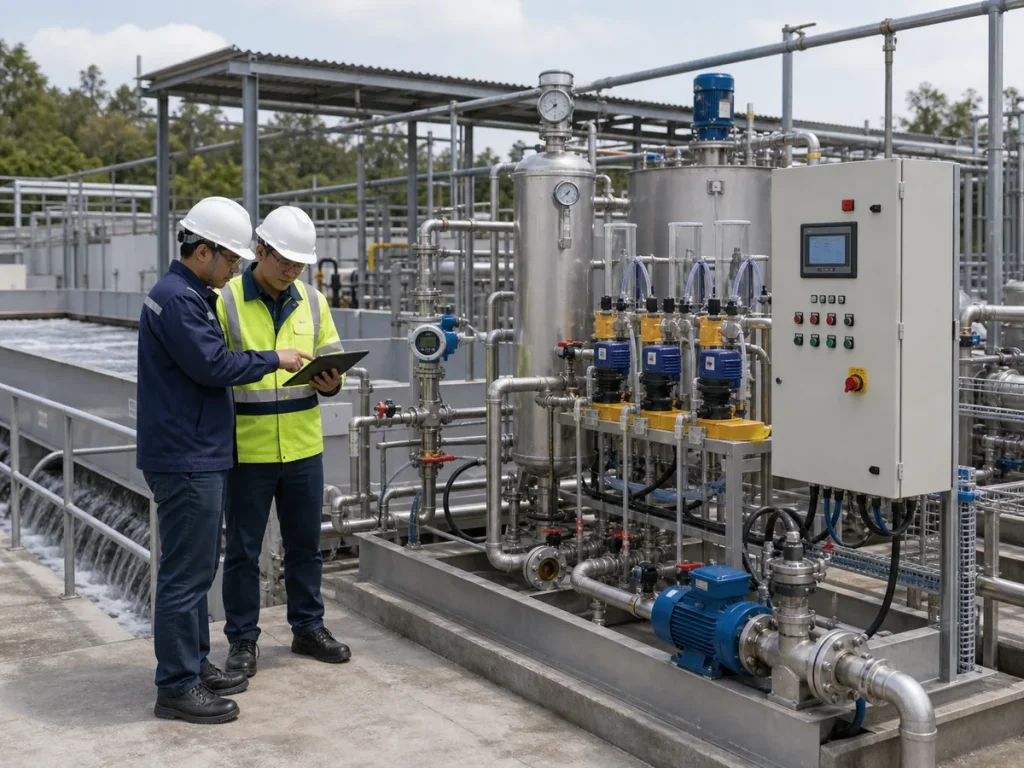
DAF systems connect process design, civil layout, chemical storage, electrical power, automation, sludge handling, odor control, access platforms, and downstream treatment. The DAF package may be vendor-supplied, but it still needs site-level coordination. Poor interface review can create blocked access, awkward chemical delivery, difficult sludge removal, undersized drains, or unsafe maintenance routes.
The same logic used for tank nozzle, pipe support, and access coordination applies here. DAF inlet pipes, outlet channels, recycle lines, saturator connections, skimmer drives, chemical dosing points, drains, wash water, sample points, and sludge lines all need space for operation and maintenance.
11. Commissioning Should Tune the Whole System
DAF commissioning should not stop when the pump starts and water flows through the tank. The team should tune coagulation, polymer dose, flocculation time, recycle ratio, saturation pressure, air control, skimmer speed, sludge removal frequency, pH control, and effluent quality under real or representative wastewater conditions.
Clean water testing can confirm hydraulic paths, leaks, pump rotation, and instrument loops, but it cannot prove flotation performance. Startup records should capture influent condition, chemical dose, pH, floc appearance, float blanket behavior, recycle pressure, effluent clarity, sludge production, and operator adjustments.
DAF Design Checklist for EPC Teams
- Confirm wastewater suitability with flow, solids, oil and grease, pH, temperature, surfactants, emulsions, and particle behavior.
- Use jar tests or pilot testing where wastewater chemistry is uncertain or variable.
- Coordinate upstream equalization so DAF feed flow and pollutant load are reasonably stable.
- Design coagulation and flocculation with correct injection points, mixing energy, and contact time.
- Check recycle ratio, saturation pressure, air control, release arrangement, and bubble quality.
- Review hydraulic loading, solids loading, oil loading, peak flow, and future expansion.
- Size sludge collection, pumping, storage, dewatering, and disposal for real sludge characteristics.
- Plan foam, odor, covers, ventilation, access, and cleaning requirements early.
- Select materials and coatings based on wastewater, chemicals, chloride, pH, sludge, and cleaning exposure.
- Commission with real process data, chemical tuning, sludge observations, and documented operating settings.
Common Mistakes to Avoid
The first mistake is assuming that DAF will remove dissolved pollutants without forming floatable particles. The second is underestimating chemical conditioning. The third is sizing from average flow while ignoring peak production events, cleaning cycles, and oil or solids slugs. The fourth is forgetting that sludge handling can control daily reliability as much as the flotation tank itself.
Another common mistake is treating the DAF as a packaged black box. Vendor equipment is important, but the surrounding EPC design determines whether the unit can be fed consistently, dosed correctly, drained safely, cleaned easily, and maintained without interrupting the whole treatment plant.
Conclusion
Dissolved air flotation can be a strong industrial wastewater pretreatment tool when the wastewater is suitable and the system is designed around real process behavior. Its success depends on chemical conditioning, microbubble generation, hydraulic loading, sludge handling, instrumentation, and site integration.
For EPC teams, the practical goal is not just to install a DAF unit. It is to create a stable pretreatment step that operators can tune, maintain, and rely on before wastewater moves into downstream biological, chemical, or polishing systems.