
Industrial wastewater equalization tanks are often described as buffer tanks, but that name can make them sound simpler than they are. A well-designed equalization tank does more than store wastewater for a few hours. It stabilizes hydraulic flow, reduces shock loading, blends variable concentrations, protects downstream treatment units, improves chemical dosing control, and gives operators a safer way to manage abnormal influent events.
For EPC teams, the equalization tank is also an interface-heavy unit. It sits between production drainage, collection sumps, pretreatment, biological treatment, chemical dosing, odor control, pumps, instruments, civil structures, and plant operation. If it is sized or detailed poorly, the downstream process may struggle even when the main treatment equipment is correctly selected.
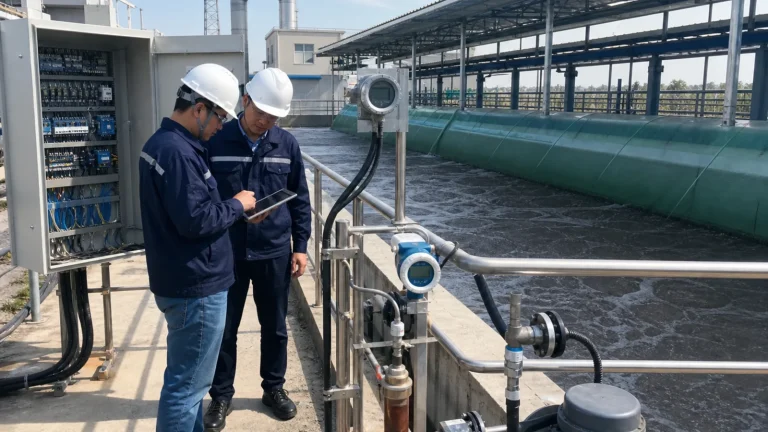
What an Equalization Tank Is Expected to Do
The main purpose of equalization is to reduce variability before wastewater enters downstream treatment. Industrial facilities rarely produce a perfectly steady flow. Cleaning cycles, batch discharge, shift changes, process washdown, rainwater intrusion, chemical dumps, temperature swings, and maintenance events can all change flow rate and pollutant concentration.
Without equalization, a treatment system may receive a sudden high-flow surge, high-COD batch, acidic or alkaline discharge, hot wastewater, high solids pulse, or toxic shock. Equalization gives the plant a controlled volume where these changes can be blended, measured, and fed forward at a more stable rate.
Equalization is not a substitute for treatment. It does not remove pollutants by itself unless it is intentionally combined with aeration, pH adjustment, chemical dosing, solids handling, or other process functions. The design should therefore start with a clear definition of what the tank must achieve.
1. Start With Real Influent Variability
Equalization volume should be based on actual wastewater behavior, not a fixed percentage of daily flow copied from another project. The design team should study hourly flow, batch discharge timing, peak production events, cleaning cycles, pollutant concentration, pH range, temperature, suspended solids, oil and grease, toxicity risk, and any planned future expansion.
For new facilities, influent data may be incomplete. In that case, the team should use process knowledge, production schedules, water balance, cleaning procedures, and conservative assumptions. The most important question is not only average daily flow. It is how fast and how far the wastewater characteristics can move away from normal operation.
2. Separate Hydraulic Equalization From Process Equalization
Hydraulic equalization focuses on flow rate. It allows pumps to feed downstream units at a controlled rate even when influent arrives in peaks and valleys. Process equalization focuses on wastewater quality. It blends concentration, pH, temperature, and other characteristics so biological or chemical treatment units see a more stable load.
Many tanks must do both jobs, but the design details are different. A tank that only buffers flow may not need the same mixing intensity as a tank that must prevent solids deposition and blend high-strength batch discharges. A tank used for pH correction or chemical dosing needs more reliable mixing, instrumentation, and retention time control.
3. Mixing Is a Process Decision, Not an Accessory
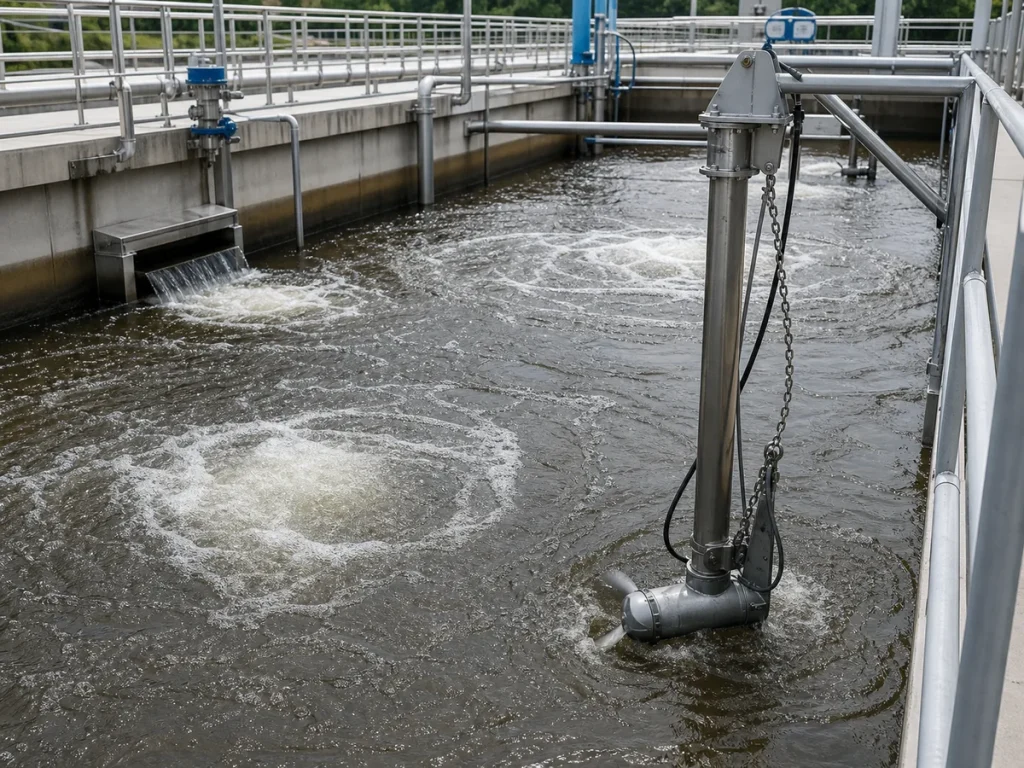
Mixing prevents short-circuiting, solids settlement, floating scum pockets, localized odor generation, chemical stratification, and uneven discharge quality. The right mixing method depends on tank geometry, liquid depth, solids content, viscosity, wastewater temperature, corrosiveness, maintenance access, and whether aeration is also needed.
Submersible mixers, mechanical agitators, jet mixing, coarse bubble aeration, diffused air, and recirculation pumps all have different strengths and limitations. A submersible mixer may be effective in a rectangular basin but require lifting access for maintenance. Aeration may provide both mixing and dissolved oxygen, but it also increases energy use, aerosol risk, foam potential, and odor ventilation needs.
Mixing should also avoid dead zones around corners, sumps, baffles, inlet channels, and pump suction areas. If solids are present, the team should decide whether the equalization tank should keep solids suspended, allow controlled settling, or include a separate solids removal step before the tank.
4. Aeration Can Help, but It Is Not Always the Answer
Aeration can reduce septic conditions, support partial oxidation, improve odor control in some wastewater streams, and provide mixing. However, it is not a universal solution. Aeration can strip volatile compounds, increase foam, create aerosols, accelerate corrosion in certain environments, and add blower or compressor maintenance.
Where wastewater has high sulfide risk, strong odors, high organic loading, or long holding time, aeration and ventilation should be reviewed together. In some cases, covered equalization with controlled exhaust treatment may be more appropriate than open aeration. In other cases, controlled mechanical mixing with limited aeration may provide a better balance of energy use and odor control.
5. Odor and Gas Risk Should Be Considered Early
Industrial wastewater equalization tanks can generate odors from sulfides, volatile organic compounds, anaerobic decomposition, warm wastewater, fats and oils, or retained sludge. Odor control is much harder to add after the civil structure and access platforms are already fixed.
The design should consider whether the tank should be open, covered, partially covered, ventilated, or connected to an odor treatment system. Covers must also be coordinated with mixer access, instrument maintenance, foam control, inspection openings, safety rescue planning, and corrosion protection.
Gas risk should not be treated casually. Confined-space entry, hydrogen sulfide exposure, low oxygen conditions, and explosive atmosphere potential may be relevant depending on wastewater type and operating mode. The tank layout should support safe isolation, ventilation, monitoring, access, and rescue planning.
6. Material, Coating, and Corrosion Decisions Matter
Equalization tanks can be concrete basins, steel tanks, lined tanks, FRP tanks, or other structures depending on project scale and wastewater chemistry. The material decision should consider pH range, chloride level, temperature, abrasion, oil and grease, biological activity, cleaning method, cover design, expected service life, and maintenance access.
Concrete may need protective lining in aggressive service. Steel may require internal coating, corrosion allowance, cathodic protection, or careful detailing around welds and nozzles. FRP can be useful for certain corrosive streams but must be checked for temperature, chemical compatibility, UV exposure, structural support, and nozzle loads.
Because equalization tanks are often close to chemical dosing, pumps, sumps, and wastewater channels, material selection should be reviewed together with site drainage and spill control. The same thinking behind secondary containment and drainage design applies to wastewater facilities, even when the liquid is not stored as a saleable chemical product.
7. Inlet and Outlet Arrangement Controls Performance
The inlet should distribute flow without creating excessive turbulence, erosion, odor release, or short-circuiting to the outlet. For batch discharges, the inlet zone may need additional mixing, baffles, stilling arrangements, or splash control. If the influent contains solids, rags, grit, or oil, upstream screening or separation should be considered.
The outlet and pump suction arrangement should avoid drawing floating scum, settled solids, or unmixed pockets. Pump start-stop levels, minimum submergence, vortex control, NPSH, standby pump strategy, and low-level protection all affect reliability. A poorly placed suction point can make a large tank behave like a much smaller one.
8. Instrumentation Should Support Operations, Not Just Reporting
Level measurement is essential, but it is not the only useful signal. Depending on the process, an equalization tank may need influent flow, outlet flow, pH, temperature, conductivity, oxidation-reduction potential, dissolved oxygen, mixer status, blower status, pump status, high-level alarm, low-level interlock, and abnormal-discharge alarms.
The team should decide which signals are used for control and which are only for monitoring. For example, level may control feed pumps, pH may control dosing, dissolved oxygen may control aeration, and flow pacing may protect downstream biological treatment. Instruments should be accessible for cleaning, calibration, and replacement, not hidden under covers or behind pipework.
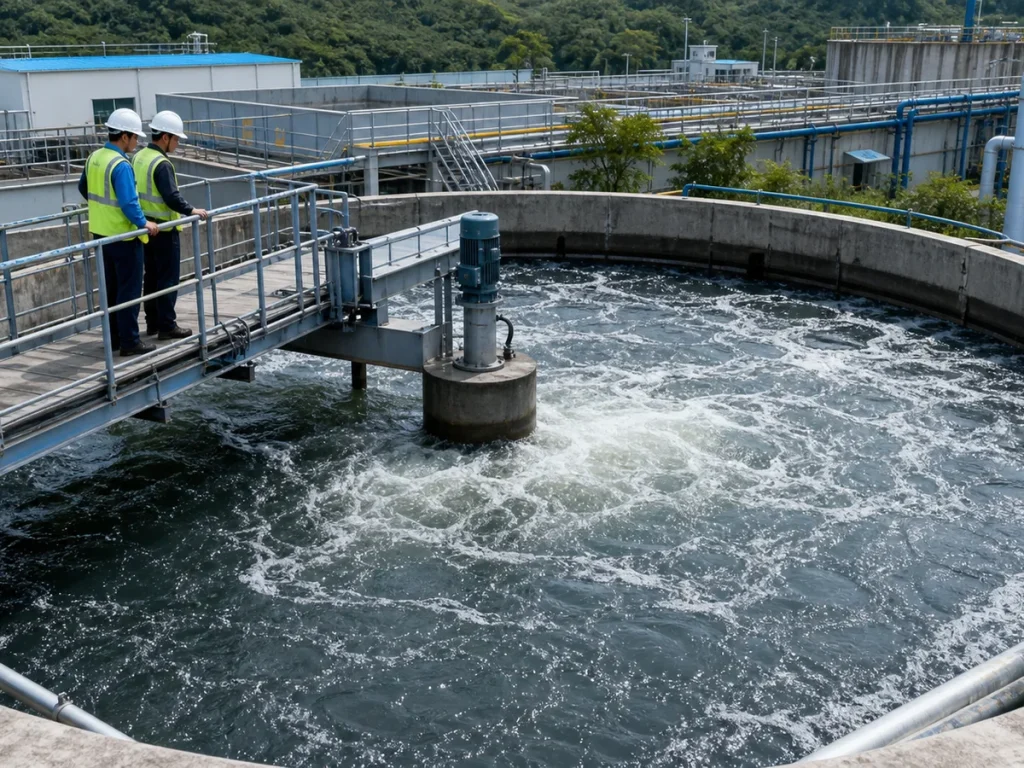
9. Pumping Strategy Affects the Whole Treatment Plant
The equalization tank usually feeds downstream treatment through controlled pumping. Pump selection should consider variable level, solids, corrosiveness, required turndown, standby philosophy, maintenance isolation, and downstream process sensitivity. A simple on-off pump arrangement may create hydraulic pulses that reduce the value of equalization.
Variable-speed pumping can help maintain a stable feed rate, but it needs proper level logic and minimum-flow protection. Standby pumps should be tested and maintained. Valves, flow meters, non-return valves, strainers, and flushing points should be placed where operators can reach them safely.
10. EPC Interfaces Must Be Checked Before Construction
Equalization tanks touch many disciplines. Civil design sets tank volume, shape, access, coatings, covers, and bund or drainage details. Mechanical design defines pumps, mixers, air systems, valves, and pipework. Electrical and automation design provides power, controls, interlocks, and alarms. Operations and safety teams define access, cleaning, sampling, isolation, and emergency response.
These interfaces should be reviewed before drawings are frozen. The lessons from tank nozzle, pipe support, and access coordination apply strongly here: an equalization tank is successful only if it can be operated, maintained, inspected, cleaned, and modified safely over its service life.
11. Commissioning Should Test Real Operating Logic
Commissioning should not stop at confirming that pumps and mixers can start. The team should test level control, high-level alarms, low-level pump protection, mixer interlocks, blower or aeration control, pH or chemical dosing response, flow pacing, standby pump changeover, drain valves, emergency stop functions, and alarm reporting.
Water testing can confirm hydraulic paths and instrument logic, but wastewater startup may reveal foam, odor, solids deposition, chemical demand, or biological shock issues that clean water cannot show. Startup records should capture operating levels, feed rates, pH trends, odor observations, mixer performance, and any changes made after first operation.
This handover discipline is similar to storage tank commissioning and hydrostatic testing: the project should produce a working system and a clear record of how it was tested, adjusted, and accepted.
Equalization Tank Design Checklist
- Define whether the tank is for hydraulic buffering, process equalization, pH adjustment, aeration, odor control, or multiple functions.
- Use hourly flow and wastewater quality variability, not only average daily flow, for sizing assumptions.
- Review mixing needs against solids, scum, concentration swings, tank shape, and maintenance access.
- Confirm whether aeration helps the process or creates avoidable odor, foam, aerosol, or energy problems.
- Plan odor control, covers, ventilation, gas monitoring, and confined-space access early.
- Select material, lining, and coating based on actual wastewater chemistry and cleaning method.
- Check inlet, outlet, baffle, drain, overflow, and pump suction details for short-circuiting and solids behavior.
- Make instruments reachable for cleaning, calibration, and replacement.
- Coordinate pumps, mixers, blowers, power supply, controls, alarms, and standby operation.
- Verify commissioning logic with realistic operating scenarios, not only single-equipment startup checks.
Common Mistakes to Avoid
The first mistake is sizing the tank from average flow while ignoring peak discharge and quality swings. The second is treating mixing as a small accessory instead of a core process function. The third is leaving odor control until complaints begin. The fourth is installing instruments and mixers in locations that are technically correct on drawings but difficult to maintain in daily operation.
A fifth mistake is assuming equalization will fix all downstream problems. Equalization reduces variability, but it cannot fully compensate for unsuitable pretreatment, under-sized biological capacity, poor chemical control, or toxic industrial discharges that should be segregated or managed at source.
Conclusion
An industrial wastewater equalization tank is a process control unit, not just a holding tank. It protects downstream treatment by smoothing flow and load variation, but only when sizing, mixing, aeration, odor control, instrumentation, materials, and commissioning are handled as one integrated design problem.
For EPC teams, the best equalization design is practical: it reflects real influent variability, gives operators usable controls, keeps maintenance access safe, supports clean handover, and allows the rest of the wastewater treatment system to operate under more stable conditions.