
A membrane bioreactor, usually called MBR, combines biological wastewater treatment with membrane separation. Instead of relying on a secondary clarifier to separate sludge from treated water, an MBR uses microfiltration or ultrafiltration membranes to retain biomass and suspended solids while producing a clarified permeate. For industrial wastewater projects, this can be valuable when footprint is limited, effluent quality requirements are tight, or downstream reuse and polishing are part of the plan.
MBR systems are not simply aeration tanks with membrane racks installed inside. The design must connect influent variability, biological loading, membrane selection, MLSS control, aeration demand, air scouring, transmembrane pressure, backwash logic, chemical cleaning, sludge wasting, instrumentation, and maintenance access. When these elements are treated separately, MBR plants often face rapid fouling, unstable operation, high energy use, or difficult maintenance.
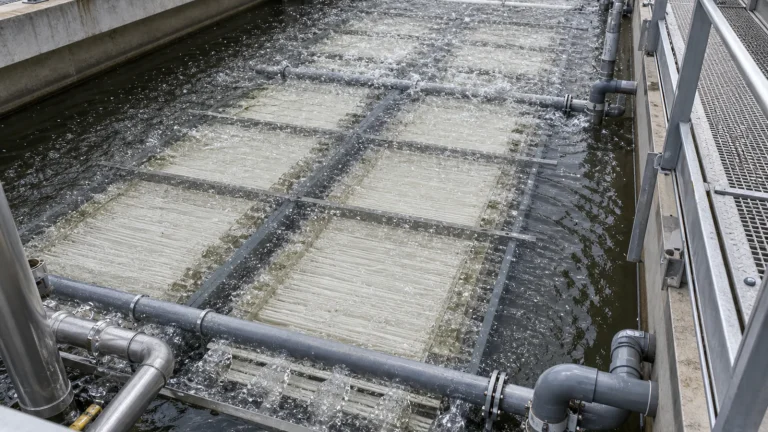
Where MBR Fits in Industrial Wastewater Treatment
MBR is commonly considered where a project needs compact biological treatment, consistent suspended solids removal, high-quality effluent, or a stronger barrier before reuse, reverse osmosis, disinfection, or discharge. It can be used for industrial parks, food and beverage wastewater, pharmaceutical wastewater, electronics wastewater, landfill leachate after pretreatment, and mixed industrial wastewater where biological treatment is feasible.
The technology does not remove every pollutant by itself. Dissolved salts, many refractory organics, color compounds, heavy metals, and toxic inhibitors may require source control, pretreatment, chemical treatment, adsorption, advanced oxidation, or polishing. MBR should be selected based on actual wastewater behavior, not only the desire for a clean-looking effluent.
1. Confirm Wastewater Treatability Before Selecting MBR
The first design question is whether the wastewater is biologically treatable and stable enough for membrane operation. The project team should review COD, BOD, BOD-to-COD ratio, ammonia, total nitrogen, phosphorus, oil and grease, surfactants, solvents, salinity, temperature, pH, suspended solids, hardness, metals, toxic compounds, and expected production variability.
High-strength wastewater may need staged biological treatment. Oily wastewater may need upstream removal. Toxic or inhibitory discharges may need segregation or equalization. High salinity or temperature can affect microbial activity and membrane compatibility. Treatability testing, pilot data, or careful reference comparison can prevent a system from being oversized mechanically but unstable biologically.
2. Pretreatment Protects the Membranes
MBR membranes are sensitive to rags, fibers, hair-like solids, grit, large suspended solids, oil, grease, sticky floc, and some chemical carryover. Fine screening is usually essential before an MBR. Depending on wastewater type, the project may also need grit removal, oil separation, pH adjustment, cooling, equalization, coagulation, or DAF before biological treatment.
An upstream industrial wastewater equalization tank can reduce hydraulic and pollutant shock loads before the biological stage. Where fats, oils, grease, or light solids are significant, dissolved air flotation DAF pretreatment may reduce the load entering the MBR and improve membrane reliability.
3. Choose Membrane Type for the Operating Reality
Industrial MBR systems often use hollow fiber or flat sheet membranes, and each option has different implications for footprint, aeration, cleaning, maintenance, tolerance to solids, module replacement, and operating cost. The right choice depends on wastewater quality, MLSS concentration, expected fouling behavior, service access, operator skill, and lifecycle cost.
Membrane pore size, material, module configuration, cassette arrangement, header design, and replacement strategy should be reviewed together. A membrane that performs well in municipal wastewater may not automatically suit industrial wastewater with oils, solvents, high temperature, abrasive solids, or aggressive cleaning requirements.
4. Flux Should Be Conservative and Defensible
Flux is the permeate flow per membrane area. A high design flux can reduce installed membrane area and capital cost, but it can also increase fouling rate, transmembrane pressure, cleaning frequency, energy use, and operational risk. Industrial wastewater often requires more conservative flux assumptions than clean municipal references.
Flux should be checked against average flow, peak flow, temperature, viscosity, MLSS, fouling tendency, required redundancy, cleaning downtime, and future expansion. The design should also define whether peak flow is handled by higher flux, equalization, additional membrane trains, or controlled discharge scheduling.
5. MLSS and Sludge Age Affect Both Biology and Membranes
MBR systems can operate at higher mixed liquor suspended solids than conventional activated sludge systems, but higher MLSS is not automatically better. Excessive MLSS can increase viscosity, reduce oxygen transfer, increase aeration energy, worsen membrane fouling, and make sludge wasting harder. Too low an MLSS can reduce biological stability and load tolerance.
Sludge retention time should match treatment objectives, temperature, nitrification requirements, sludge production, and industrial wastewater characteristics. For ammonia removal, nitrifying bacteria need enough sludge age. For high-COD industrial streams, organic loading and oxygen demand must be reviewed carefully. Sludge wasting arrangements should be practical, measurable, and maintainable.
6. Aeration Has Two Jobs
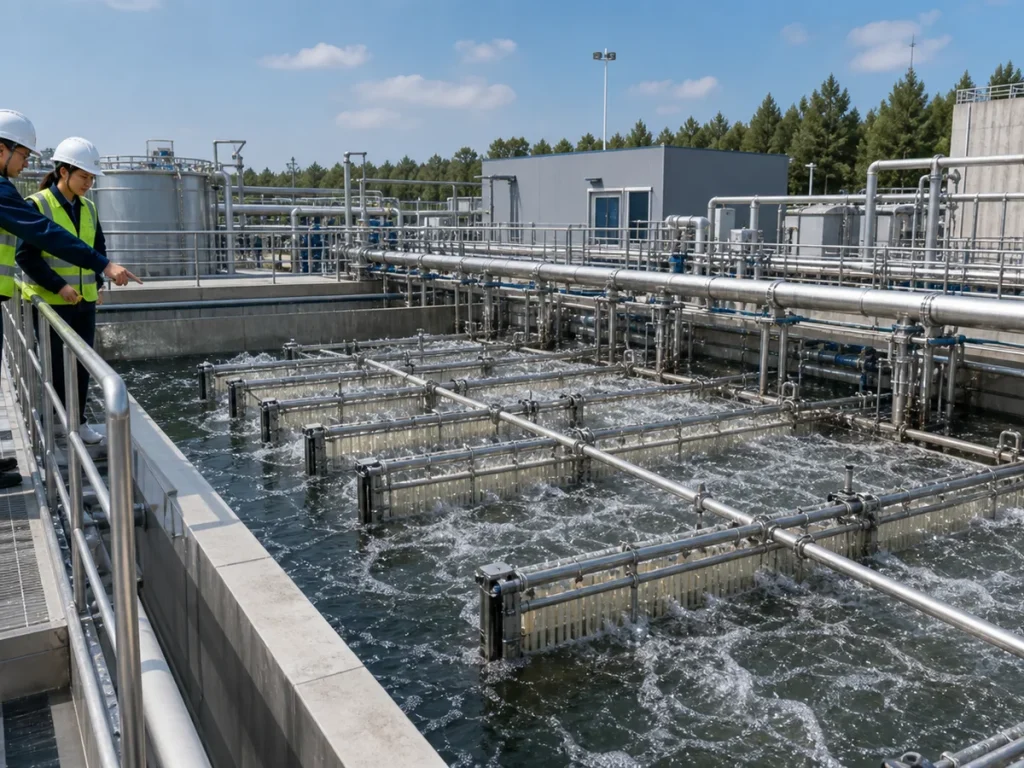
MBR aeration must support biological oxygen demand and membrane air scouring. These are related but not identical functions. Biological aeration supplies oxygen to microorganisms, while membrane scouring helps limit solids accumulation and fouling on membrane surfaces.
Undersized aeration can reduce treatment performance and accelerate fouling. Oversized aeration can waste energy, damage floc structure, increase foam, disturb anoxic zones, and create unnecessary operating cost. Air distribution, blower turndown, diffuser maintenance, membrane scouring pattern, dissolved oxygen control, and energy management should be reviewed together.
7. Fouling Control Is a Design Strategy
Membrane fouling can come from suspended solids, colloids, extracellular polymeric substances, oils, grease, scaling, biological growth, poor floc condition, high viscosity, inadequate screening, weak air scouring, or chemical incompatibility. Because fouling has many causes, it cannot be solved by cleaning chemicals alone.
A practical fouling control strategy includes pretreatment, stable biological operation, conservative flux, proper MLSS range, air scouring, backwash or relaxation cycles, chemical cleaning, operator monitoring, and early response to transmembrane pressure trends. The design should tell operators what to adjust when fouling begins to accelerate.
8. Backwash, Relaxation and CIP Need Real Space
MBR systems often use permeate backwash, membrane relaxation, maintenance cleaning, and periodic clean-in-place procedures. These functions require tanks, pumps, valves, chemical storage, dosing lines, drains, neutralization or waste handling, and safe access. If these are squeezed into leftover space, maintenance becomes slower and less reliable.
Chemical cleaning design should consider membrane supplier limits, chemical compatibility, concentration, temperature, soaking time, waste cleaning solution handling, operator protection, ventilation, and spill control. Cleaning chemicals should not be routed casually into drains or biological basins without understanding the impact.
9. Instrumentation Should Track Membrane Health
Useful MBR instrumentation may include influent flow, permeate flow, air flow, dissolved oxygen, MLSS, sludge wasting flow, level, transmembrane pressure, permeability, turbidity, temperature, pH, oxidation-reduction potential, blower status, pump status, valve position, chemical tank level, backwash status, and cleaning cycle records.
Transmembrane pressure and normalized permeability trends are especially important because they show whether membrane resistance is increasing. Operators should be able to distinguish hydraulic overload, biological upset, air scouring problems, scaling, and chemical cleaning need. Without the right signals, MBR operation becomes reactive.
10. EPC Layout Should Support Module Removal
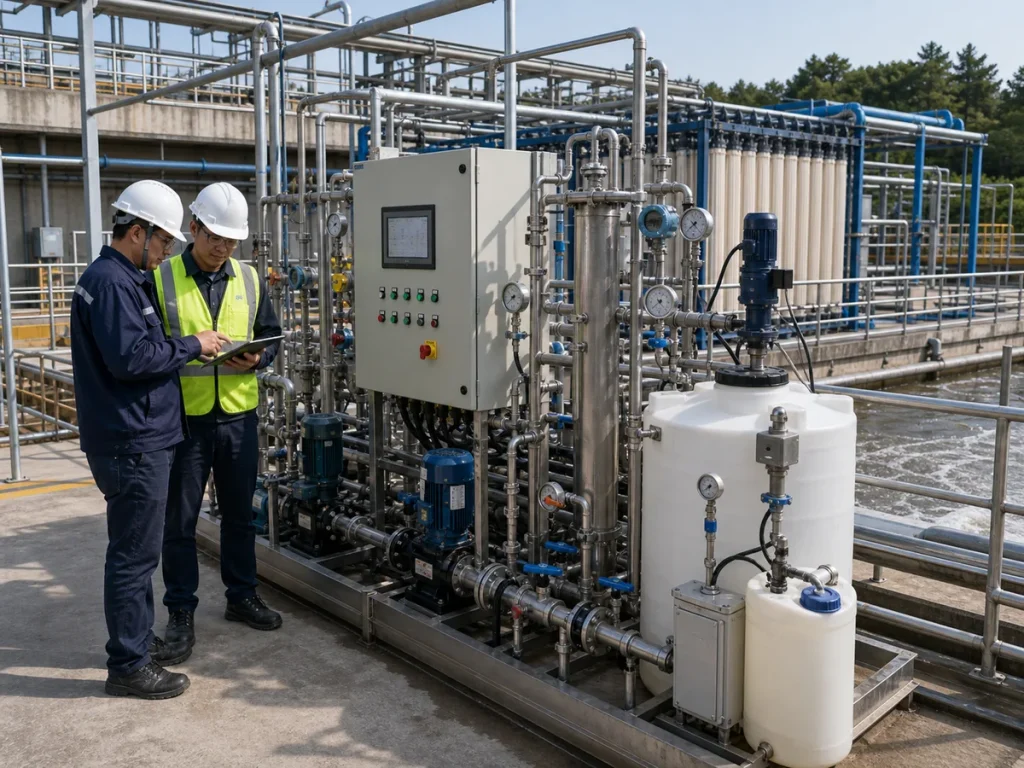
MBR modules eventually need inspection, cleaning, repair, or replacement. The project layout should provide lifting access, crane or hoist strategy, removable covers, clear walkways, isolation valves, drainage, washdown, safe chemical handling, and enough laydown space. These requirements are often underestimated when membrane basins are fitted tightly into a compact site.
The same practical logic behind tank nozzle, pipe support, and access coordination applies to MBR packages. Permeate headers, air headers, recirculation lines, sludge wasting points, instruments, chemical lines, and access platforms must be coordinated before construction and procurement are frozen.
11. Commissioning Should Ramp Up Gradually
MBR commissioning should confirm mechanical completion, clean water testing, air distribution, membrane integrity, permeate pump control, valve sequencing, level control, backwash or relaxation cycles, alarm logic, and cleaning system readiness. Biological startup should then be ramped up with careful monitoring of feed load, MLSS, dissolved oxygen, sludge age, transmembrane pressure, permeability, and effluent quality.
Clean water testing can prove hydraulics, but it cannot prove long-term membrane performance under real mixed liquor. Startup records should capture operating flux, TMP, air flow, DO, MLSS, sludge wasting, cleaning events, effluent turbidity, ammonia or COD trends where relevant, and any changes made during ramp-up.
MBR Design Checklist for EPC Teams
- Confirm biological treatability, toxicity risk, salinity, oil and grease, temperature, pH, and wastewater variability before selecting MBR.
- Define pretreatment requirements such as fine screening, equalization, pH control, cooling, oil removal, or DAF.
- Select membrane type, module configuration, material, and replacement strategy for the actual industrial service.
- Use conservative flux assumptions supported by wastewater data, pilot testing, or defensible references.
- Coordinate MLSS, sludge age, oxygen demand, sludge wasting, and biological treatment objectives.
- Design aeration for both biological oxygen supply and membrane air scouring.
- Provide a full fouling control strategy, not only a chemical cleaning plan.
- Make backwash, relaxation, maintenance cleaning, and CIP practical and safe.
- Track membrane health with TMP, permeability, flow, air, level, turbidity, and cleaning records.
- Provide module lifting, laydown, isolation, drainage, access, and chemical handling space.
Common Mistakes to Avoid
The first mistake is choosing MBR for effluent quality without proving that the wastewater is biologically stable and membrane-compatible. The second is weak screening or pretreatment. The third is using aggressive design flux to reduce capital cost while pushing fouling risk into daily operation. The fourth is treating CIP, membrane removal, and sludge wasting as secondary details.
Another common mistake is measuring only final effluent quality while ignoring membrane health trends. An MBR can produce good permeate for a period while TMP rises and cleaning frequency increases. By the time effluent quality deteriorates, the operating problem may already be expensive to correct.
Conclusion
MBR can be a strong choice for industrial wastewater projects that need compact treatment and high-quality effluent, but it requires disciplined design. Pretreatment, biological control, membrane selection, conservative flux, aeration, fouling management, cleaning systems, instrumentation, and maintenance access all need to be engineered together.
For EPC teams, the goal is not just to install membrane modules. It is to build a treatment system that can operate steadily, show operators what is happening, protect the membranes, and remain maintainable throughout the project life.