
Sludge dewatering is often treated as the final utility area of an industrial wastewater treatment plant, but it can decide whether the whole system is practical to operate. A treatment process may remove pollutants successfully, yet still create daily problems if sludge is too wet, polymer use is unstable, filtrate is overloaded, cake handling is messy, odor is uncontrolled, or the dewatering machine cannot keep up with production peaks.
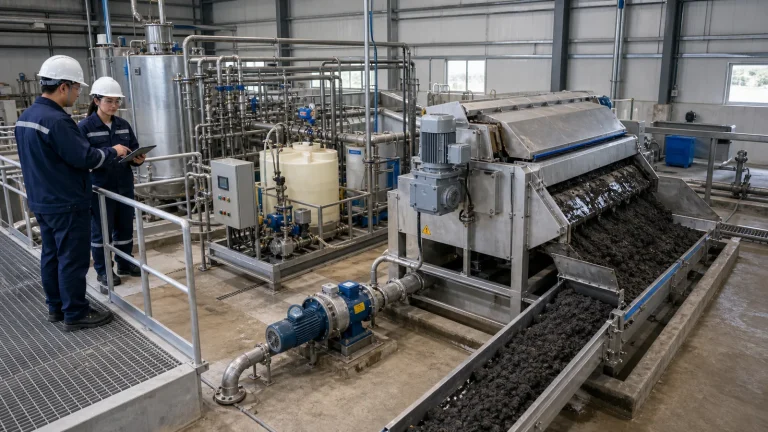
For EPC teams, sludge dewatering should be designed as a complete solids-handling system rather than a single machine purchase. The system includes sludge storage or thickening, feed pumps, polymer preparation, polymer dosing, dilution water, dewatering equipment, filtrate return, cake conveyance, storage, odor control, wash water, drains, electrical controls, access, and maintenance planning.
Why Sludge Dewatering Needs Early Design Attention
Industrial wastewater sludge varies widely. Biological waste sludge, DAF float sludge, chemical precipitation sludge, oily sludge, metal hydroxide sludge, and mixed primary-secondary sludge have very different solids concentration, compressibility, oil content, fiber content, odor, shear sensitivity, and polymer demand. A dewatering system that works for one sludge type may perform poorly on another.
The design objective is not only to produce the driest possible cake. The practical goal is to reduce disposal volume, control filtrate quality, keep polymer cost reasonable, make cake transport stable, protect downstream or return streams, and give operators a system they can tune without constant manual intervention.
1. Start With Sludge Characterization
The first step is to understand the sludge source and variability. The design team should review total solids, volatile solids, oil and grease, fiber, grit, inorganic content, pH, alkalinity, temperature, particle size, biological activity, chemical coagulant use, polymer response, and expected sludge production under average and peak operating conditions.
Sludge from dissolved air flotation DAF pretreatment may contain floated oil, grease, and chemically conditioned solids. Waste activated sludge from a membrane bioreactor MBR system may have different floc structure, biological solids, and viscosity. Chemical sludge from metals removal or phosphorus precipitation may have high inorganic content and different cake behavior.
2. Decide Whether Thickening Is Needed
Dewatering equipment usually performs better when feed solids concentration is reasonably stable. If sludge is too dilute, equipment capacity may be wasted on water rather than solids. Thickening can reduce hydraulic load, improve polymer conditioning, and make downstream dewatering more consistent.
Thickening options may include gravity thickening, rotary drum thickening, dissolved air flotation thickening, screw thickening, or storage with controlled decanting depending on sludge type. However, thickening also adds equipment, odor risk, residence time, and maintenance needs. The decision should be based on mass balance, feed variability, sludge stability, and dewatering equipment requirements.
3. Match Equipment to Sludge Behavior
Common industrial sludge dewatering options include screw presses, belt filter presses, centrifuges, filter presses, and sometimes geotextile or drying-based systems for specific applications. Each technology has a different balance of cake dryness, energy use, wash water demand, polymer demand, operator attention, footprint, odor control, maintenance, and tolerance to oily or abrasive solids.
Screw presses are often attractive for lower speed, enclosed operation, and relatively simple maintenance. Belt presses can handle a wide range of sludge types but need belt washing, alignment, and operator attention. Centrifuges can provide compact high-throughput operation but require higher energy, careful maintenance, and good control of feed and polymer. Filter presses can produce drier cake in some cases but operate in batch cycles and require cake discharge planning.
4. Polymer Preparation Controls Performance
Polymer is not just a chemical cost line. It is often the key to stable dewatering. Poor polymer aging, wrong dilution, weak mixing, overdosing, underdosing, or incorrect injection location can cause wet cake, poor filtrate, high sludge carryover, and unstable operation.
The polymer system should match polymer type, required concentration, maturation time, dilution water quality, dosing range, turndown, and maintenance access. Powder polymer systems require careful wetting and aging. Emulsion polymer systems need proper inversion and dilution. Operators should be able to adjust polymer dose based on sludge condition without guessing.
5. Feed Pumping Should Protect Floc
Once sludge has been conditioned with polymer, excessive shear can break floc and reduce dewatering performance. Pump selection, pipe velocity, mixer type, injection point, and distance to the machine all affect floc quality. A high-shear pump or poorly placed valve can undo good chemical conditioning.
Feed pumps should provide stable flow and enough turndown for variable sludge production. Progressive cavity pumps, rotary lobe pumps, diaphragm pumps, or other sludge-capable options may be considered depending on solids, viscosity, abrasiveness, and maintenance capability. The system should include flushing, isolation, pressure protection, and safe access.
6. Cake Handling Must Be Designed, Not Improvised
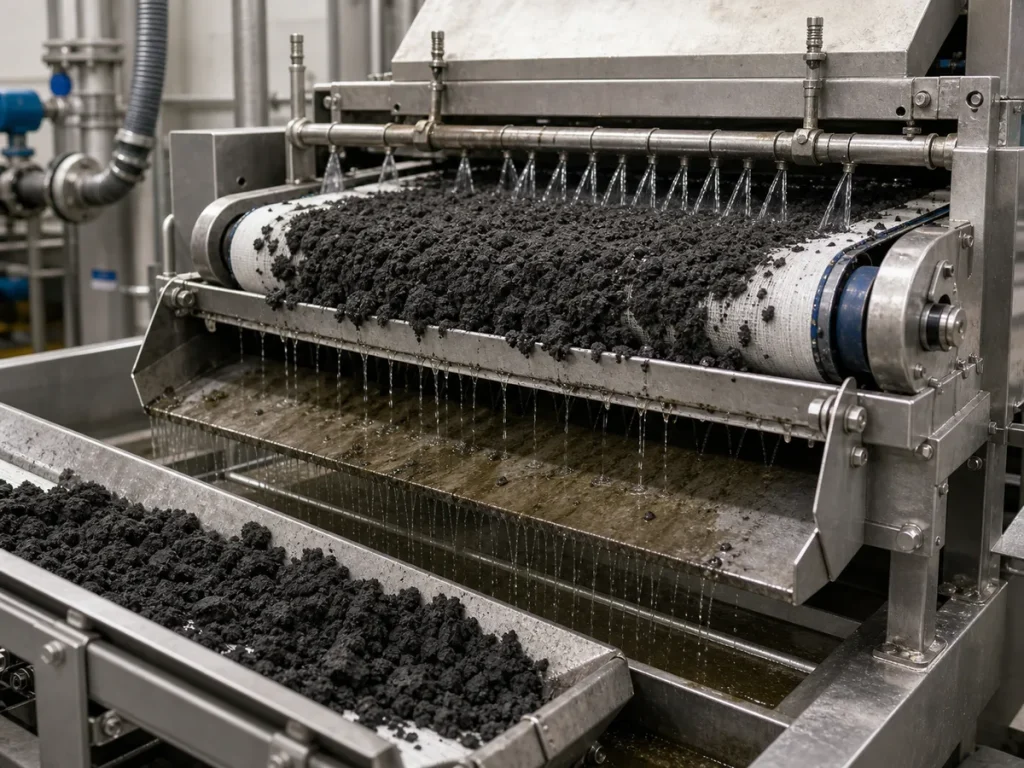
Dewatered cake still has to move somewhere. Conveyors, screw conveyors, bins, skips, hoppers, cake pumps, bagging systems, or truck loading arrangements should be selected based on cake consistency, stickiness, odor, disposal method, and site layout. A cake that looks acceptable at the discharge point can still create problems if it bridges in a bin, sticks to conveyors, or leaks during transport.
Cake storage capacity should reflect truck schedules, weekend operation, maintenance downtime, and seasonal disposal constraints. If the project relies on off-site hauling, vehicle access, loading height, drainage, odor, spill response, and weather protection need practical review.
7. Filtrate Return Can Affect the Main Plant
Filtrate or centrate is not clean water. It may contain suspended solids, soluble COD, ammonia, phosphorus, metals, polymer, fine floc, oil, or odor compounds depending on sludge source. Returning this stream to the head of the plant can create a recycle load that affects treatment performance.
The filtrate return point should be chosen carefully. Sending it to an industrial wastewater equalization tank may help buffer hydraulic and pollutant impacts. Sending it directly to a sensitive biological stage may cause load swings. In some projects, filtrate may require separate collection, controlled return, or side-stream treatment.
8. Odor, Housekeeping and Drainage Matter
Sludge handling areas can become odor sources if sludge is stored too long, anaerobic conditions develop, or washdown water collects in poor drains. Enclosed equipment, ventilation, local exhaust, covers, regular cleaning, floor slope, and controlled drainage should be reviewed during layout design.
Housekeeping is not a cosmetic issue. Slippery floors, polymer spills, overflowing drains, leaking sludge lines, and poor cake containment create safety and operating problems. The dewatering room should have washdown water, trench drains or floor drains, curbs, spill control, and surfaces that can be cleaned without damaging equipment.
9. Instrumentation Should Support Daily Tuning
Useful signals may include sludge feed flow, feed solids where available, polymer dose, polymer solution flow, dilution water flow, machine speed, torque, belt tension, wash water pressure, filtrate turbidity, cake discharge status, hopper level, pump pressure, and alarm history. Not every project needs every instrument, but operators should have enough information to diagnose changes.
Without useful signals, operators often respond by adding more polymer or slowing the machine. That may solve one symptom while increasing cost or reducing capacity. A good control system helps distinguish dilute feed, poor polymer activation, wrong dose, excessive feed rate, wash water failure, mechanical wear, and sludge quality changes.
10. EPC Interfaces Should Be Checked Before Procurement
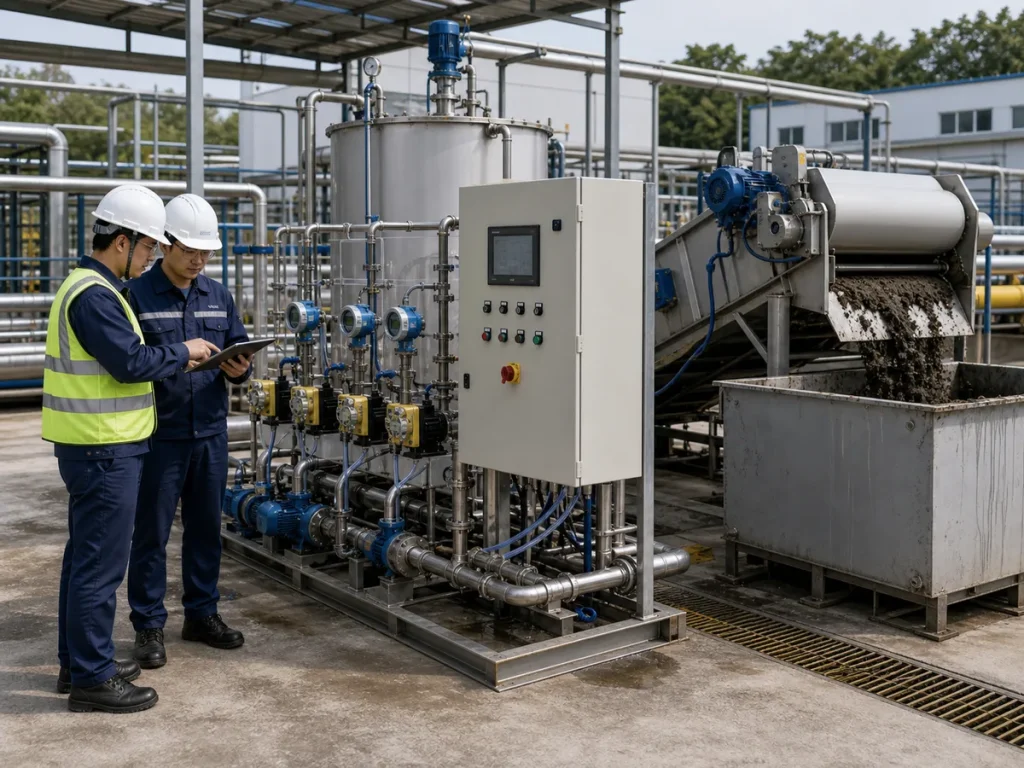
The dewatering package connects process, civil, mechanical, electrical, automation, chemical storage, odor control, drainage, and logistics. The layout should provide space for polymer deliveries, sludge pump maintenance, machine access, screen or belt removal, wash water supply, chemical containment, cake bin handling, forklifts or trucks, and future equipment replacement.
Dewatering systems are often installed late in the project, after the main treatment units have received more attention. That creates avoidable conflicts with pipe routing, floor drains, electrical panels, ventilation ducts, crane access, and building doors. Good EPC review prevents the dewatering area from becoming the most difficult part of the plant to maintain.
11. Commissioning Should Tune the Whole Solids Line
Commissioning should test more than machine start-stop. The team should tune sludge feed rate, polymer preparation, polymer dose, dilution water, floc quality, machine speed, wash water, filtrate return, cake discharge, hopper level, odor control, alarms, and operator procedures under representative sludge conditions.
Startup records should capture feed solids, polymer dose, cake dryness, filtrate appearance, machine speed, throughput, wash water use, operator adjustments, and any abnormal sludge events. These records help the owner understand whether the system is operating as designed or simply being forced through startup.
Sludge Dewatering EPC Checklist
- Characterize sludge source, solids concentration, oil, grit, fiber, pH, temperature, polymer response, and production variability.
- Decide whether sludge thickening is needed before mechanical dewatering.
- Select screw press, belt press, centrifuge, filter press, or other equipment based on sludge behavior and operating priorities.
- Design polymer preparation, aging, dilution, dosing range, injection location, and operator adjustment capability.
- Choose feed pumps and pipe routing that provide stable flow without excessive floc shear.
- Plan cake conveyance, storage, truck loading, drainage, odor, and disposal logistics.
- Review filtrate quality and choose a return point that does not destabilize the main treatment process.
- Provide washdown, floor drainage, spill control, ventilation, access, and safe housekeeping design.
- Use instrumentation that helps operators tune dewatering instead of guessing.
- Commission the complete solids line with real sludge, not only clean-water equipment checks.
Common Mistakes to Avoid
The first mistake is selecting equipment from a catalog capacity without testing or characterizing the actual sludge. The second is underestimating polymer preparation and dosing control. The third is ignoring filtrate return load. The fourth is planning cake discharge only at the machine outlet without thinking through storage, hauling, weather, odor, and operator access.
Another common mistake is treating sludge dewatering as a low-priority back-end package. In daily operation, sludge handling often affects labor, chemical cost, hauling cost, odor complaints, housekeeping, and downtime. Poor design becomes visible quickly after startup.
Conclusion
Industrial wastewater sludge dewatering is a system design problem, not only an equipment selection task. Sludge characteristics, thickening, polymer control, feed pumping, mechanical dewatering, filtrate return, cake logistics, odor control, instrumentation, and commissioning all need to be coordinated.
For EPC teams, the goal is a solids handling line that operators can run steadily, tune based on real signals, maintain safely, and integrate with the main treatment process without creating hidden recycle loads or daily handling problems.