
Taking an industrial storage tank out of service is a managed engineering project, not simply an instruction to empty it. The tank may retain product in low points, connected piping, internals, sumps, heating coils, or sludge; it may contain vapors or contaminated residues; and it remains connected to civil, electrical, fire-protection, environmental, and operating systems until those interfaces are formally controlled.
This guide concerns above-ground tank decommissioning. The exact legal and technical requirements depend on stored materials, site permits, local regulations, waste classification, contract scope, and the owner’s approved safety systems. It does not substitute for a site-specific isolation plan, confined-space permit, emergency plan, environmental review, or demolition method statement.
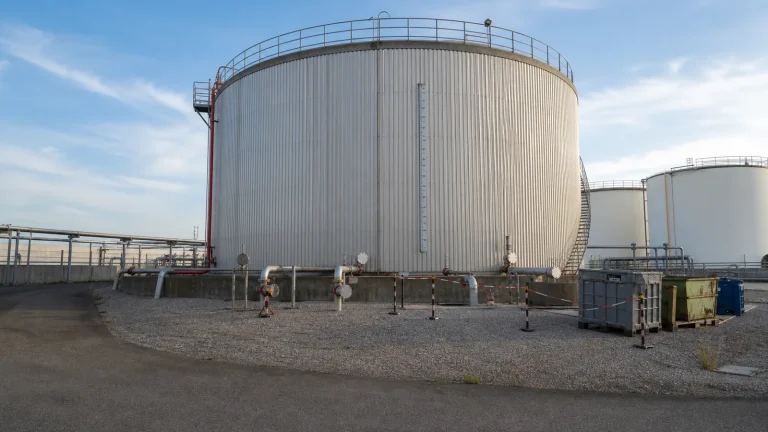
Define the End State and Scope
Start by deciding whether the tank is being mothballed, changed to another service, dismantled for reuse, demolished, or left as part of a wider site closure. The end state determines the required cleaning level, inspection evidence, pipe disposition, structural work, waste route, drawings, and environmental closeout. A vague “remove tank” scope commonly leaves ownership gaps for foundations, buried lines, dike drainage, electrical feeds, monitoring points, and contaminated materials.
Inventory Removal and Verified Isolation
Product removal must address the tank, transfer lines, valves, pump casings, recirculation loops, sample lines, drains, heaters, mixers, vapor connections, and fire or foam interfaces where applicable. The target condition is verified isolation, not merely a stopped pump or closed hand valve. The site should define acceptable isolation methods, verification, lockout or tagout, blind management, electrical isolation, and responsibility before the work starts.
Cleaning and residue handling should follow the controlled approach described in the tank-cleaning and turnaround planning guide. Residue volume, vapor hazards, wash water, sludge, filters, absorbents, removed lining, and temporary hoses need an approved characterization and containment route before the tank is opened.
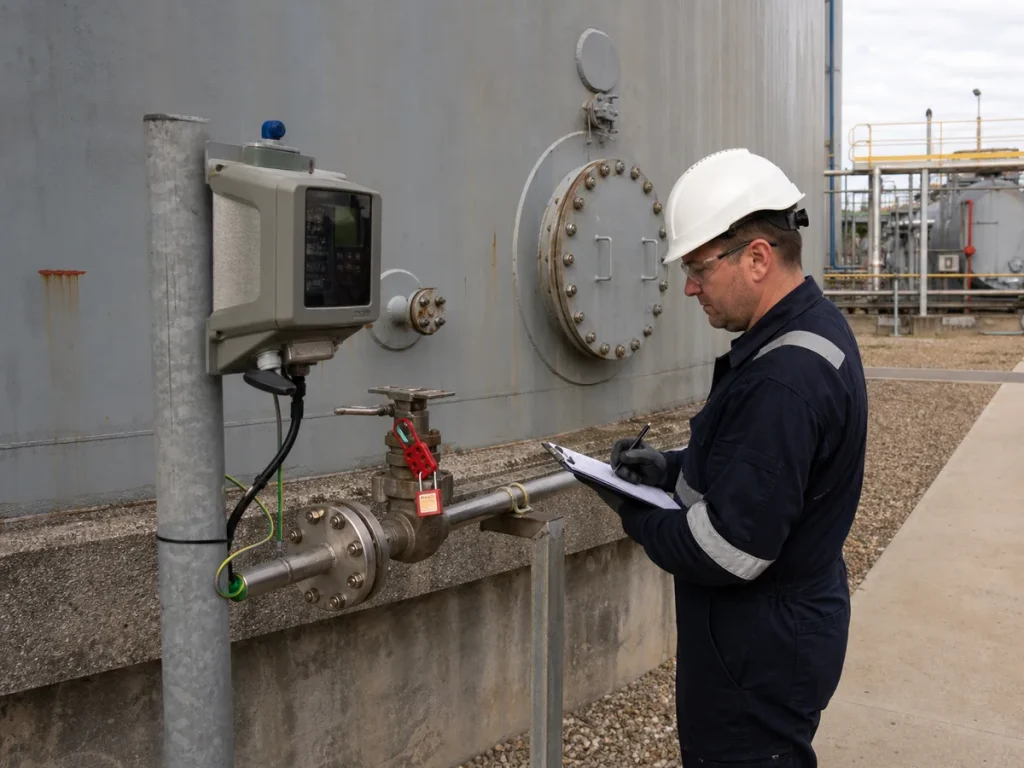
Atmosphere, Access and Intrusive Work
Gas freeing, ventilation, atmospheric testing, access control, lighting, communication, and rescue arrangements must be established through the facility permit system before entry or hot work is considered. Remote cleaning, inspection, cutting, or lifting methods should be evaluated where they reduce exposure. Any entry remains subject to applicable confined-space rules and competent-person assessment.
Environmental and Drainage Controls
Decommissioning can create temporary spill paths through open flanges, wash water, rain, dismantled pipework, containers, and dike drains. The team must preserve containment and operate drains only under the approved plan. Align temporary work with the site’s secondary containment, drainage, and leak-risk controls; do not assume an inactive tank no longer needs environmental protection.
Demolition, Reuse and Material Segregation
Before cutting or lifting, confirm structural stability, residual product condition, roof and shell support, access, lifting plan, nearby live systems, overhead hazards, and exclusion zones. A demolition sequence should be engineered around the actual tank construction and site constraints. Reusable components require traceability and inspection; scrap steel, coatings, insulation, piping, cables, contaminated soil, and waste liquids need separate identification and approved routes.
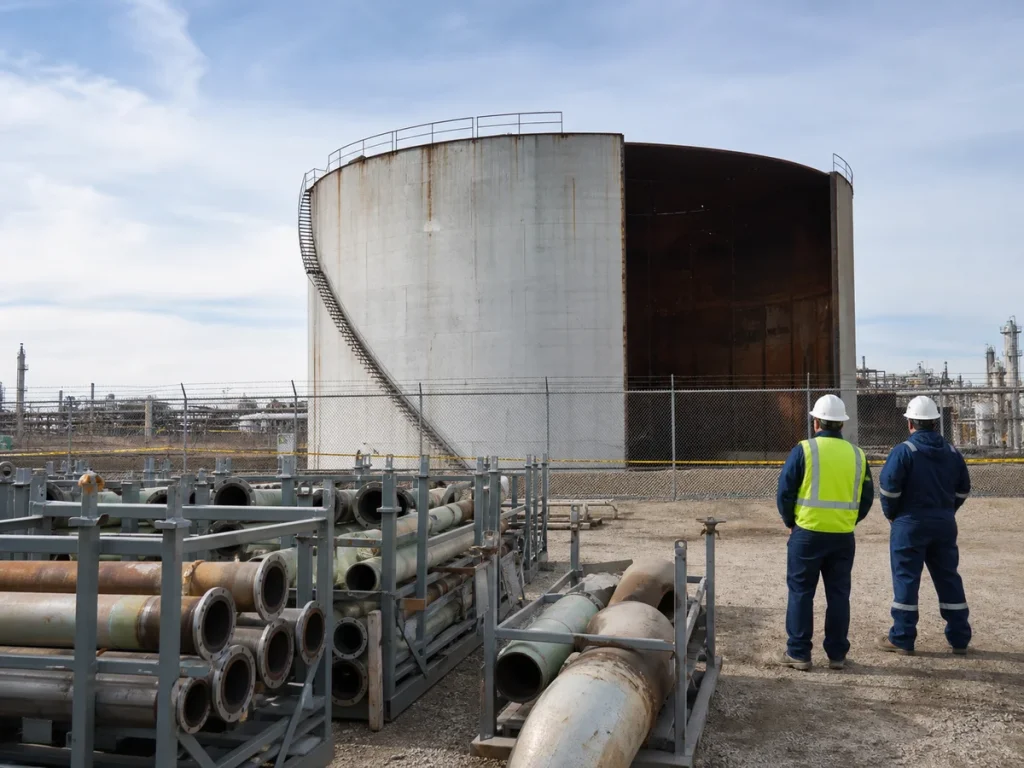
Records and Closeout
Closeout should include scope changes, isolation records, cleaning evidence, waste manifests, inspection findings, dismantling records, environmental observations, remaining assets, drawings, photographs, and handover confirmation. Findings such as settlement, corrosion, leaks, or previously unknown modifications should be retained in the tank inspection and maintenance record, even where the tank will not return to service.
Decommissioning Checklist
- Define end state, scope boundaries, authority approvals, and owners for every tank interface.
- Remove inventory and verify process, energy, electrical, and vapor isolation.
- Plan atmosphere control, access, permit, rescue, cleaning, and waste management before intrusive work.
- Maintain containment, drainage, fire protection, and temporary spill control.
- Use an engineered demolition or lifting sequence and segregate reusable and waste materials.
- Complete records, environmental closeout, asset updates, and site handover.
Key Takeaway
Safe tank decommissioning joins operations, safety, environmental control, integrity, demolition, and documentation in one controlled sequence. The strongest projects establish the final end state early, prove isolation before work begins, and leave a reliable record of what was removed, found, managed, and transferred.