
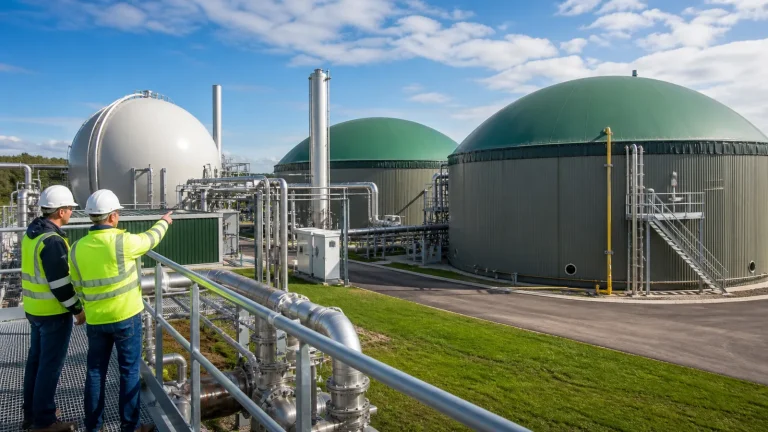
Biogas anaerobic digesters look like tanks from the outside, but they are not ordinary storage tanks. They are biological reactors, heated process vessels, gas-producing systems, and safety-critical EPC packages at the same time. A successful digester design must connect feedstock behavior, hydraulic retention time, organic loading, mixing, heating, corrosion protection, gas handling, instrumentation, and commissioning into one working system.
Many biogas project problems begin when the digester is treated as a civil volume plus a few accessories. In reality, the tank geometry, feed preparation, recirculation, mixing energy, gas collection, condensate drainage, desulfurization, emergency flaring, and operating controls all influence biological stability and plant reliability.
What Makes an Anaerobic Digester Different
An anaerobic digester receives organic material and converts part of that material into biogas through microbial activity in an oxygen-free environment. Typical biogas contains methane, carbon dioxide, water vapor, and smaller amounts of compounds such as hydrogen sulfide depending on feedstock and operating conditions. The design must therefore support both the liquid digestion process and safe gas management.
The digester is affected by biology, hydraulics, solids behavior, temperature, gas pressure, corrosion, and maintenance access. A conventional liquid storage tank can often be evaluated by capacity, material, foundation, nozzles, and containment. A digester needs those checks too, but it also needs process stability: feedstock consistency, retention time, mixing pattern, alkalinity, volatile fatty acid control, temperature control, and gas quality management.
1. Start With Feedstock Reality
Feedstock is the starting point for digester design. Food processing wastewater, distillery wastewater, livestock manure, sludge, source-separated organics, agricultural residues, and mixed industrial streams can behave very differently. The design team should review total solids, volatile solids, COD, fats and oils, fiber, grit, nitrogen, sulfur, pH, alkalinity, temperature, salt, toxic compounds, and seasonal variation.
Average feed data is useful, but batch peaks and abnormal loads often cause the real operating problems. A digester receiving a stable industrial wastewater stream is different from one receiving variable organic waste or thick sludge. Feedstock variability affects equalization, screening, grit removal, dilution, heating demand, mixing load, scum formation, foaming risk, and gas production rate.
For industrial wastewater projects, the upstream buffering strategy may be as important as the digester itself. The same principles discussed in industrial wastewater equalization tank design apply here: a more stable feed usually makes biological control easier and reduces downstream upset risk.
2. Define the Digester Function Clearly
Not every anaerobic system has the same objective. Some projects prioritize energy recovery, some reduce organic load before aerobic treatment, some stabilize sludge, some treat high-strength wastewater, and some combine waste management with heat and power generation. The digester volume, temperature regime, mixing concept, solids handling, gas use, and redundancy philosophy should match the actual project goal.
A digester designed for high-rate industrial wastewater treatment may use a different reactor concept than a continuously stirred tank treating thick organic slurry. A sludge digester may emphasize stabilization and dewatering compatibility. A biogas-to-energy project may place more emphasis on gas yield, gas cleaning, engine protection, and heat balance.
3. Retention Time and Organic Loading Must Be Reviewed Together
Hydraulic retention time is the average time liquid remains in the digester. Organic loading rate describes the amount of biodegradable material applied to the reactor volume over time. These two values should be reviewed together because a tank can appear large enough hydraulically while still being overloaded biologically.
Short retention time can reduce conversion efficiency and increase instability risk. Excessive organic loading can lead to acid accumulation, pH decline, foaming, odor, poor gas quality, or process failure. Conservative design should consider startup loading, seasonal variation, future expansion, feedstock substitutions, and operator response time during abnormal events.
4. Mixing Should Match Solids and Reactor Geometry
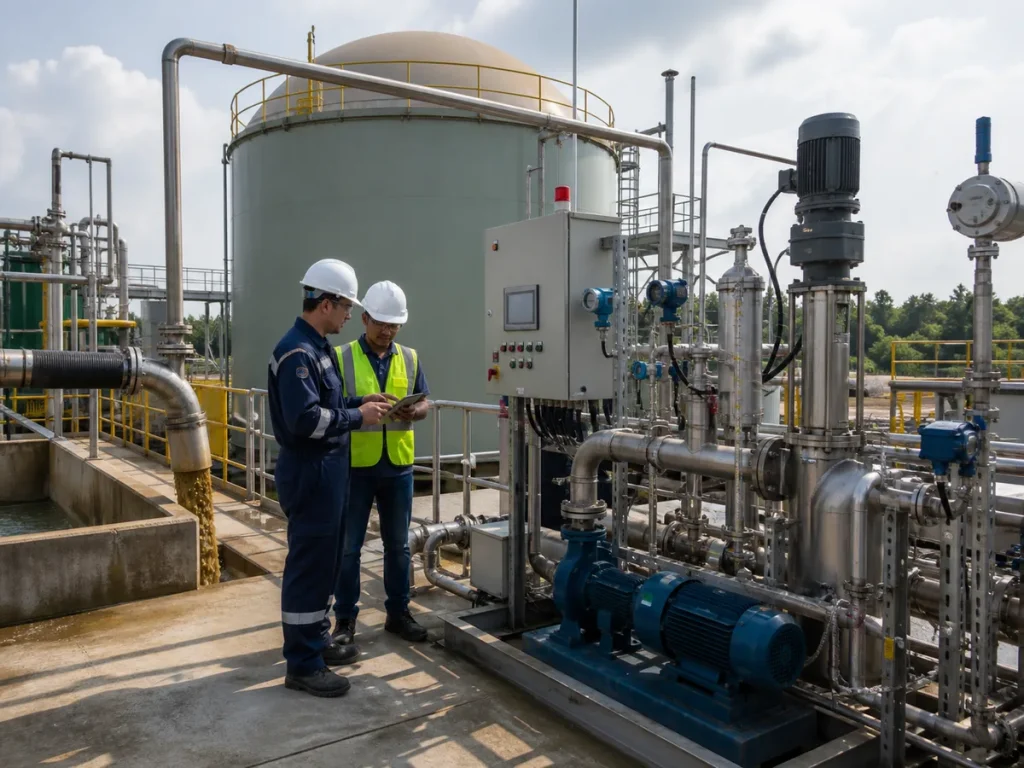
Mixing keeps active biomass in contact with substrate, reduces stratification, distributes heat, limits dead zones, and helps prevent solids deposition or floating scum layers. However, more mixing is not always better. Excessive shear, high energy use, poor nozzle placement, or unreliable mixer access can create new problems.
Mixing options may include mechanical mixers, draft tubes, pumped recirculation, gas mixing, jet mixing, or combinations of methods. Selection depends on tank shape, liquid depth, solids concentration, viscosity, feed location, scum potential, maintenance philosophy, and power availability. The design should avoid relying on a single mixer that cannot be maintained without long shutdowns.
The inlet and outlet arrangement should also support mixing. If feed enters near the outlet or if recirculation creates a short path, part of the reactor volume may be underused. For digesters with high solids or fibrous feedstock, maintenance access and blockage risk become critical design issues.
5. Heating and Temperature Control Affect Biology
Anaerobic digestion is temperature sensitive. Many projects operate in mesophilic or thermophilic ranges, but the exact target and tolerance depend on process design, feedstock, biology, and operating strategy. Rapid temperature swings can reduce microbial activity and destabilize the process.
The heat balance should include feed temperature, ambient conditions, tank insulation, cover design, heat exchanger efficiency, recirculation flow, standby heat source, and heat recovery from combined heat and power equipment if used. A digester may have enough tank volume and mixing capacity but still underperform if heat input is insufficient or poorly controlled.
6. Gas Space, Pressure Control and Gas Holder Design Matter
Biogas production is not perfectly constant. Gas flow changes with feed rate, temperature, biological condition, and operating events. The digester roof, gas space, gas holder, pressure relief devices, gas piping, and flare system should be designed for variable gas production and safe pressure management.
Low pressure can cause air ingress if the system is poorly controlled. Excessive pressure can stress membranes, seals, relief devices, and connected equipment. Pressure control should be coordinated with gas storage, gas users, flare capacity, condensate drainage, and shutdown logic.
7. H2S, Moisture and Condensate Cannot Be Ignored
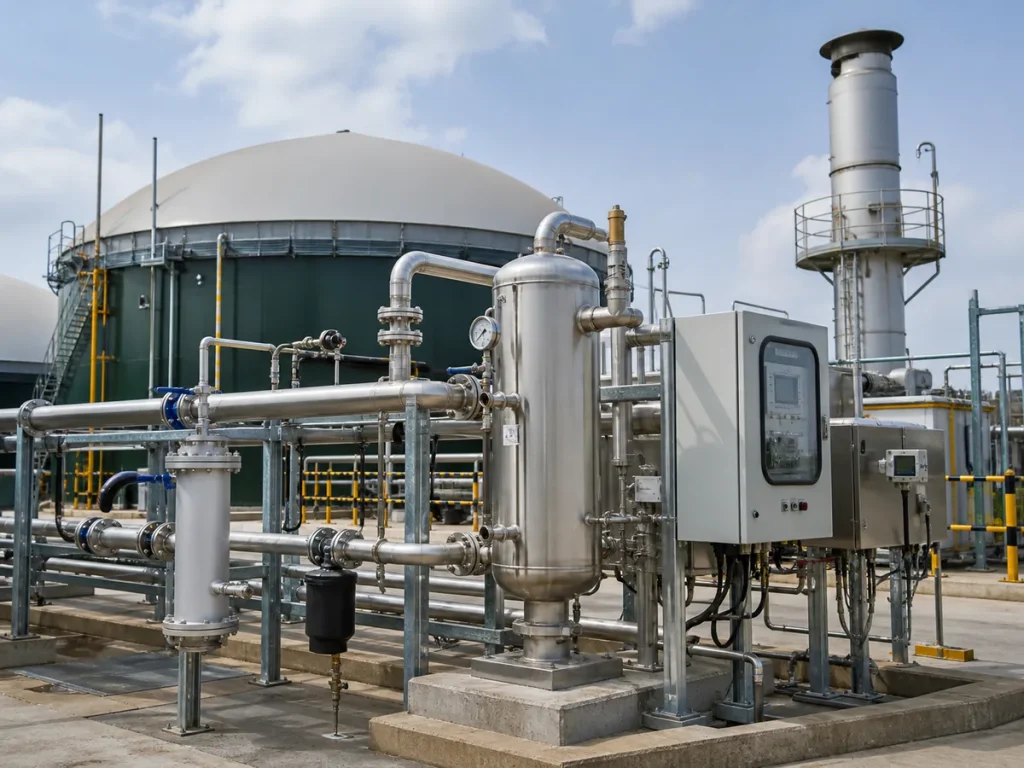
Raw biogas is typically saturated with moisture and may contain hydrogen sulfide depending on sulfur in the feedstock. Moisture can condense in piping and equipment, while hydrogen sulfide can contribute to corrosion, odor, catalyst damage, engine wear, and safety concerns. The gas handling system should therefore include appropriate condensate removal, drainage slope, knock-out pots, traps, desulfurization, monitoring, and material selection.
Condensate management is a common weak point. If piping low points are not drained, water can block gas flow, affect pressure control, damage equipment, or create unstable gas delivery. Condensate drains should be accessible, safe, protected from freezing where relevant, and routed to a controlled collection point.
Desulfurization may be biological, chemical, activated carbon-based, iron media-based, or another project-specific approach. The selection should consider inlet H2S variation, target gas quality, media replacement, waste handling, oxygen dosing controls where used, pressure drop, operating cost, and maintenance capability.
8. Safety Review Must Cover Both Liquid and Gas Systems
Biogas systems introduce hazards that are different from ordinary wastewater tanks. Methane is flammable, hydrogen sulfide can be toxic and corrosive, and confined-space conditions may occur around tanks, covers, pits, and process rooms. The EPC safety review should consider hazardous area classification, ventilation, gas detection, flame arresters, pressure relief, emergency shutdown, lightning protection, grounding, access control, and operating procedures.
Safety devices should not be added as isolated items. They need to work as a system. Relief devices need a safe discharge route, gas detectors need useful alarm logic, flares need reliable ignition and capacity, gas piping needs drainability, and operators need access without standing in unsafe locations.
9. Tank Details Still Need EPC Coordination
Even though the biology and gas system are central, the digester is still a tank project. Foundation, shell material, insulation, roof system, nozzles, manways, platforms, ladders, pipe supports, mixers, drains, sampling points, and instruments must be coordinated early. Poor access can make routine operation difficult and emergency response slower.
The same interface logic from tank nozzle, pipe support, and access design applies strongly to digesters. Gas lines, sludge lines, recirculation lines, heat exchanger connections, chemical dosing points, safety valves, level instruments, pressure sensors, and access openings all need working clearance and safe maintenance routes.
10. Instrumentation Should Support Biological Control
Useful instrumentation depends on the process, but common signals include feed flow, recirculation flow, digester level, temperature, pressure, pH, alkalinity-related lab data, gas flow, methane content, carbon dioxide, hydrogen sulfide, oxygen, mixer status, pump status, heating status, flare status, and gas holder level or pressure.
The control system should help operators see trends, not only alarms. Slowly rising volatile fatty acids, falling alkalinity, changing gas composition, or unstable gas flow can provide early warning before a serious upset. Instrument maintenance access and calibration routines should be planned during design, not improvised after startup.
11. Commissioning Should Be Gradual and Evidence-Based
Digesters are not commissioned like simple liquid tanks. Mechanical completion, water testing, leak checks, instrument loop checks, gas tightness checks, and safety interlock testing should occur before biological loading. After that, feed introduction should be controlled and monitored. Operators should record feed rate, temperature, pH, alkalinity, gas flow, gas quality, odor, foam, mixer operation, and heating performance.
The same handover discipline described in storage tank hydrostatic testing and commissioning is useful here, but digesters need additional biological startup records. A system can pass a mechanical test and still fail operationally if feed ramp-up, gas handling, heating, and process monitoring are not controlled.
Biogas Digester EPC Checklist
- Confirm feedstock data, variability, inhibitory compounds, solids, sulfur content, and future expansion assumptions.
- Define whether the digester is primarily for energy recovery, high-strength wastewater treatment, sludge stabilization, or combined objectives.
- Review hydraulic retention time and organic loading rate together, including startup and abnormal feed conditions.
- Select mixing technology based on solids, viscosity, tank geometry, scum risk, dead-zone control, and maintenance access.
- Prepare a heat balance that includes feed temperature, insulation, recirculation, ambient conditions, and standby operation.
- Coordinate gas space, gas holder, pressure control, relief devices, flare capacity, and gas user requirements.
- Design for moisture, condensate removal, H2S reduction, corrosion protection, and safe drain routing.
- Review methane, H2S, confined-space, hazardous-area, ventilation, grounding, and emergency shutdown requirements.
- Check nozzles, pipe supports, instruments, mixers, platforms, and manways for safe operation and maintenance.
- Commission gradually with mechanical, safety, gas, and biological startup records.
Common Mistakes to Avoid
One common mistake is designing from average feedstock data while ignoring shock loads, seasonal changes, and feed substitution. Another is treating gas handling as a small utility package, even though pressure control, condensate drainage, H2S reduction, and flaring are central to safety and uptime.
Projects also fail when mixing, heating, and instrumentation are selected late or treated as vendor accessories. A digester may have adequate volume but still underperform if feed is poorly prepared, solids settle, scum accumulates, heat transfer is weak, or operators cannot see process trends early enough.
Conclusion
A biogas anaerobic digester is a biological reactor, tank system, and gas facility combined. Good EPC design starts with feedstock reality and follows the process through retention time, mixing, heating, gas collection, H2S control, condensate drainage, safety systems, instrumentation, and commissioning.
When these elements are coordinated early, the digester has a better chance of stable operation, safer gas handling, clearer handover, and long-term maintainability. When they are treated separately, the project may look complete on drawings but struggle during startup and daily operation.