
Tank cleaning is often treated as a simple preparatory task before inspection or repair. In reality, it is a controlled turnaround project. It can involve residual product, vapors, sludge, pressure, vacuum, moving equipment, electrical energy, heat, corrosion products, cleaning chemicals, waste transport, confined-space hazards, and a sequence of mechanical and operational interfaces. The quality of the planning determines whether the tank can be inspected and returned to service without creating an avoidable safety, environmental, schedule, or product-contamination problem.
Every tank service is different. A clean water tank, a heavy-oil tank, a chemical storage tank, a wastewater equalization tank, and a fuel tank may require very different cleaning media, isolation arrangements, waste routes, inspection methods, and return-to-service criteria. The project team should use the stored-product information, tank history, site rules, local regulation, and competent safety and engineering review to develop the actual work package.
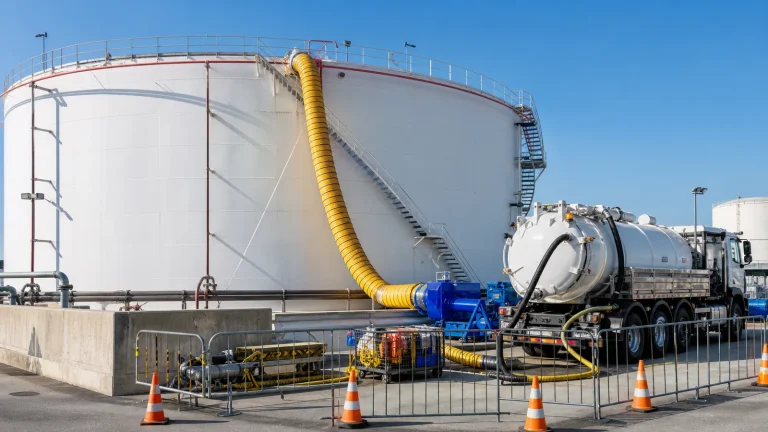
Set the Turnaround Objective and Scope
Start by defining why the tank is coming out of service. The objective may be an internal inspection, floor repair, lining renewal, heater repair, mixer maintenance, product changeover, decommissioning, cleaning after contamination, or a leak investigation. That objective determines how clean the tank must be, which areas need access, whether entry is necessary, what records must be produced, and which acceptance checks are needed before it returns to service.
A realistic scope distinguishes product removal, stripping, vapor control, cleaning, residue removal, internal inspection, repair, coating work, testing, and restoration. Combining everything under a vague “tank cleaning” line item often leaves critical interfaces unowned. For example, a cleaning contractor may remove residue, while the owner remains responsible for isolation, waste classification, entry permit, repairs, and final product-quality release.
Review Tank History Before the Shutdown
Useful pre-job records include stored-product safety data, fill and withdrawal history, previous cleaning reports, last internal inspection, floor thickness data, coating or lining records, past leaks, repairs, cathodic protection information, heater or mixer history, ventilation and venting arrangement, drawings, piping and instrument diagrams, and recent operating abnormalities. The team should identify possible water bottoms, sediment, scale, wax, polymer, corrosion debris, biological growth, incompatible residues, or pyrophoric material where relevant to the service.
Tank history helps the team forecast waste volume, cleaning difficulty, access restrictions, and inspection focus. It also prevents a common error: assuming that a tank is empty because its level reads zero. A tank may still contain material in low points, suction lines, shell pockets, roof drains, heating coils, recirculation loops, filters, or connected piping.
Product Removal and Mechanical Isolation
Product should be removed, transferred, drained, and stripped through the approved operating plan. The desired condition is not merely “pump stopped”; it is a verified state in which process lines, valves, pumps, automatic sequences, pressure sources, vapor recovery, foam systems, mixers, heaters, transfer connections, and other possible energy or product paths are controlled for the planned work. Isolation methods, verification requirements, and responsibility must follow the site’s approved procedures and the service hazards.
Isolation planning needs to include all credible connections: inlet and outlet lines, drains, vents, sample lines, recirculation loops, level instruments, heating medium, foam lines, nitrogen or purge connections, electrical circuits, mixers, pumps, cathodic protection, and automatic valve logic. A tagged valve that can still pass product or be moved by another system is not sufficient proof of isolation. The crew should verify the required isolation state before permits are issued and again when work conditions change.
Gas Freeing, Ventilation and Atmospheric Control
After product and residue are removed to the planned extent, the tank may need controlled vapor or gas freeing, purging, flushing, or forced ventilation. The strategy depends on the stored material, potential flammability, toxic or oxygen-displacing gases, cleaning method, tank geometry, vents, weather, nearby ignition sources, and exhaust location. It must not introduce a new hazard by drawing contaminated air across workers, discharging vapors toward an ignition source, or creating static or electrical risks.
Atmospheric testing is part of an entry-control program, not a one-time formality. The site must define acceptable entry conditions, competent persons, calibrated monitoring equipment, test locations, monitoring frequency, action limits, and what happens when conditions change. Forced ventilation can be an important control, but it does not by itself eliminate every confined-space hazard. Internal obstructions, residual material, changing vapor sources, nearby operations, and cleaning chemicals can alter conditions during the work.
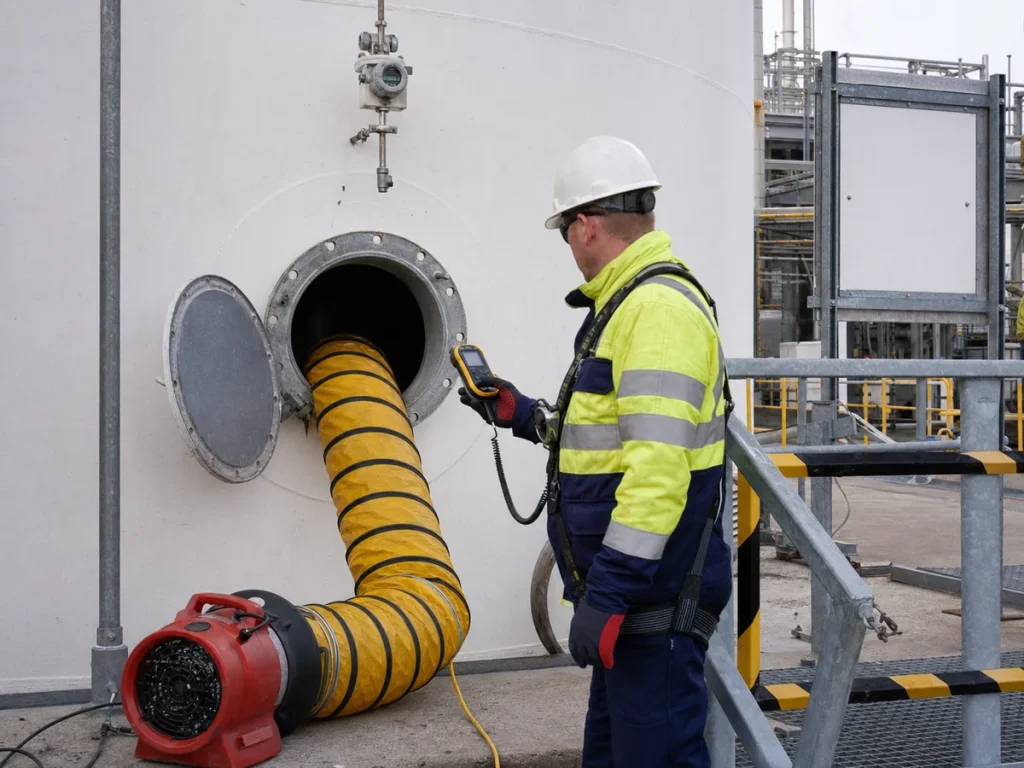
Tank Entry and Permit Interfaces
Where entry is necessary, the work must be governed by the applicable permit-required confined-space rules, site procedures, and rescue arrangements. Entry decisions require more than a clean-looking manway. The team should consider atmospheric hazards, engulfment potential, mechanical energy, electrical energy, pressure, heat, fall hazards, internal structures, access and egress, communications, attendant duties, lighting, respiratory protection, and emergency retrieval or rescue capability.
Tank cleaning can often be reduced by using external pumping, washing, inspection tools, or remote equipment before entry. Reducing the need for entry is preferable when it is technically feasible. When entry is planned, the permit system should control the exact conditions and personnel authorization. This article is an engineering planning guide; it does not replace a site-specific entry permit, rescue plan, regulatory requirement, or competent-person assessment.
Residue, Sludge and Wash-Water Handling
Sludge and residue are not generic waste. They may contain product, water, solids, corrosion debris, cleaning chemicals, or contaminants that affect classification and disposal route. The project should identify expected quantity, physical behavior, sampling requirements, container type, temporary storage, transfer method, spill control, transport documentation, treatment facility acceptance, and final disposal responsibility before the tank is opened.
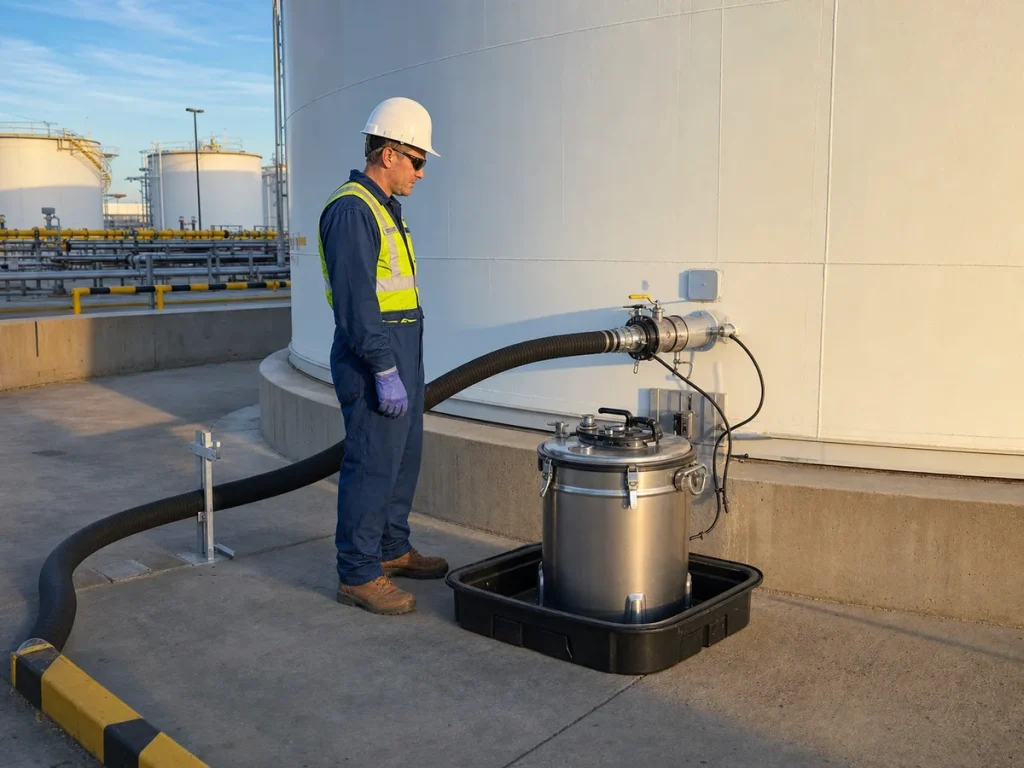
Vacuum systems, pumps, hoses, strainers, containers, and transfer lines should be selected for compatibility with the material and the work environment. Connections, drip trays, secondary containment, hose supports, grounding or bonding where required, and emergency isolation need to be part of the work setup. Waste planning also applies to spent wash water, contaminated absorbents, removed insulation, blasting media, used filters, and damaged coating material.
Use the Outage for Meaningful Internal Inspection
A cleaned tank provides a rare opportunity to inspect surfaces that cannot be evaluated from outside. The inspection scope may include bottom plates, annular area, shell-to-bottom joint, shell courses, roof underside, nozzles, welds, manways, internals, heating coils, mixer supports, sumps, drains, lining condition, and evidence of water or sludge accumulation. The scope should be prepared before cleaning so the contractor knows which areas must be accessible and which cleaning method could damage a coating or leave inspection-limiting residue.
Inspection data should be compared with the tank’s existing above-ground storage tank inspection and maintenance records. Thickness readings, floor scans, settlement observations, corrosion maps, photographs, repair areas, and coating findings should be located clearly enough for future comparison. A turnaround is more valuable when it improves the tank integrity record, not only when it produces a visually clean interior.
Coating and Lining Repair Interfaces
Cleaning can expose coating defects that were invisible under deposits. Blistering, peeling, holidays, underfilm corrosion, softening, mechanical damage, failed seam repairs, or rust staining may indicate a local repair need or a broader compatibility problem. The cleaning method itself must be compatible with the planned coating work: aggressive pressure washing, solvents, abrasive media, or high temperature can affect surfaces and cure requirements.
Repair scope should refer back to the internal coatings and linings specification, including surface preparation, environmental conditions, material compatibility, inspection hold points, dry-film thickness where applicable, holiday testing, cure, and repair records. Lining work should not be rushed because the tank is empty and the outage window is closing; an uncured or incompatible repair can create a larger failure after return to service.
Secondary Containment and Site Control
Tank cleaning changes the condition of the surrounding area. Hoses, containers, wash water, open connections, temporary pumps, trucks, and cleaning equipment can create new spill pathways even when the tank itself is isolated. Inspect containment walls, drain valves, sumps, paving, pipe penetrations, access routes, and available response equipment before the work starts. Keep rainwater and uncontaminated drainage separate from waste streams according to the approved plan.
The work plan should align with the facility’s secondary containment, drainage, and leak-risk controls. Temporary operations should not bypass normal environmental safeguards. Housekeeping, clear hose routing, barriers, lighting, access control, and daily inspection of the work area reduce both environmental and operational risk.
Repair, Testing and Return to Service
Before the tank is closed, the owner should verify that all planned inspection and repair items are complete, foreign material is removed, internal equipment is reinstalled, manways and gaskets are correct, temporary items are removed, and relevant tests or inspections have passed. The return-to-service plan may include leak or tightness checks, controlled filling, level and alarm restoration, mixer or heater checks, vent verification, coating cure confirmation, and product-quality or compatibility review.
Restoration must be controlled with the same discipline as isolation. Piping blinds or locks, electrical locks, bypasses, jumper leads, temporary grounds, ventilation equipment, hoses, and barriers should be accounted for. Automatic systems and alarms need to be placed back into their intended service condition. The operating team should receive a clear handover that states what was cleaned, inspected, repaired, tested, deferred, and changed.
EPC and Turnaround Deliverables
A strong work package includes tank drawings, isolation register, process and product data, cleaning method statement, waste plan, confined-space and safety interfaces, atmospheric monitoring plan, ventilation plan, contractor qualifications, inspection test plan, repair scope, coating specification, schedule, hold points, change-control process, daily reporting, and return-to-service checklist. The accountable owner for each decision should be named.
Closeout should include cleaning certificate or record where used, waste manifests, entry and monitoring records as required by site procedures, inspection report, photographs, thickness data, coating reports, repair documentation, test results, updated drawings, outstanding actions, and final operations acceptance. These documents are the basis for the next inspection and the next turnaround.
Tank Cleaning and Turnaround Checklist
- Define the cleaning objective, inspection scope, repair scope, product condition, and return-to-service acceptance criteria.
- Review product data, tank history, drawings, previous repairs, internal inspection records, and credible residues.
- Plan product removal, stripping, process isolation, energy isolation, and verification under the site control system.
- Establish gas freeing, ventilation, atmospheric testing, permit, attendant, communication, and rescue interfaces before entry is considered.
- Use external cleaning or remote methods where feasible to reduce entry exposure.
- Classify and plan residue, sludge, wash-water, absorbent, and coating waste before opening the tank.
- Inspect floors, annular areas, shell joints, roof underside, nozzles, internals, coatings, and historical problem areas while access exists.
- Coordinate coating repair with surface preparation, environmental conditions, cure, inspection, and product compatibility.
- Maintain secondary containment, drain control, spill response, access control, and housekeeping throughout temporary work.
- Restore valves, blinds, power, alarms, vents, instruments, and operating ownership through a documented return-to-service review.
Key Takeaway
Tank cleaning is the bridge between operations, inspection, repair, and the next service cycle. The work is most successful when residue removal, isolation, atmosphere control, waste handling, inspection, lining repair, containment, and restoration are planned as one controlled turnaround. That approach protects people and the environment while producing inspection data and repair quality that extend the useful life of the storage tank.