
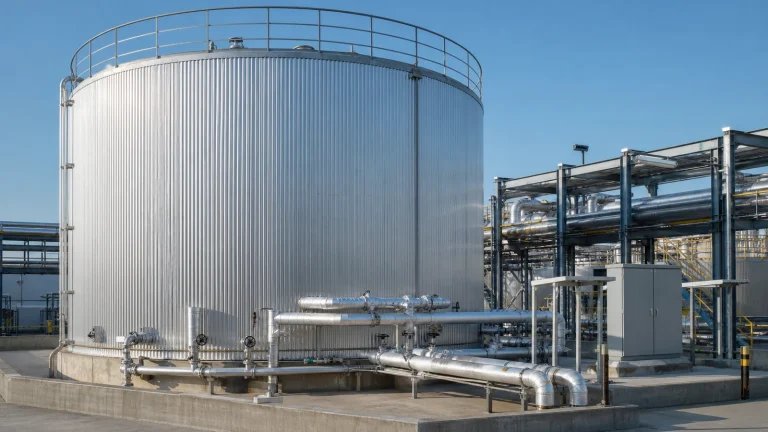
Many industrial liquids can be stored safely only when their temperature stays within a controlled range. Heavy oils, waxes, resins, bitumen, some chemicals, food ingredients, process intermediates, and slurries may become too viscous to pump, stratify, crystallize, freeze, separate, or create difficult cleaning conditions when they cool. Other tanks need insulation mainly to reduce heat gain, prevent condensation, protect personnel, or stabilize a temperature-sensitive product.
Tank heating and insulation should therefore be treated as a process and mechanical design system, not as a late construction add-on. The required product temperature, ambient range, heat loss, heating medium, internal circulation, controls, tank material, vents, nozzles, insulation, cladding, maintenance access, and emergency response all influence whether the tank works reliably in service.
Start With the Product, Not the Heating Method
The first design question is what condition the stored liquid needs to maintain. Some products need only freeze protection. Others need a temperature band to stay pumpable, meet viscosity requirements, avoid phase separation, or support downstream dosing. A target temperature that is too low can cause poor transfer and blocked lines; a target that is too high can damage product quality, accelerate degradation, increase vapor generation, soften a lining, or create a flammable-vapor concern.
The design basis should include stored liquid properties, viscosity-temperature relationship, pour or freeze behavior, heat capacity, latent heat if phase change is credible, maximum storage time, fill and withdrawal cycle, incoming product temperature, ambient design conditions, wind, solar load, rainfall, tank geometry, agitation or recirculation, and the allowable heating and cooling rate. It should define both normal operating temperature and high-temperature limits rather than relying on a single controller setpoint.
Heating Load and Operating Cases
A useful heat balance considers more than steady heat loss through the shell and roof. The tank may need to warm a cold delivery, recover after a shutdown, hold temperature while only partly full, compensate for heat loss through nozzles and connected piping, or operate during winter wind and rain. A large tank with a low product level can have a very different thermal response from a full tank, especially where heating surfaces are no longer covered by liquid.
Designers should calculate the cases that matter operationally: holding temperature, controlled warm-up, restart after cooldown, minimum inventory, maximum inventory, and loss of agitation or recirculation. The selected heater must meet the required duty without creating extreme local wall or product temperatures. Adding large heating capacity without adequate control can be as problematic as undersizing it.
Common Tank Heating Arrangements
Steam coils, hot-water coils, thermal-oil coils, external heating panels, internal jackets, and electric resistance heating are all used in industrial service. Internal coils transfer heat directly to the stored liquid and can be efficient, but they affect cleanability, inspection access, product compatibility, pressure boundary management, and local overheating. External coils or panels simplify some internal access issues but require good contact, insulation, and weather protection.
A jacket can provide even coverage where the tank and jacket are designed for it, but the jacket itself is a pressure-containing system with its own relief, venting, drainage, corrosion, hydrotest, and maintenance considerations. For tanks heated with steam, condensate removal is essential. Steam trapped in a coil can reduce heat transfer, cause water hammer, freeze in cold conditions, or leave sections of the product underheated.
Heating medium selection must consider temperature, pressure, availability, control response, leakage consequence, maintenance capability, energy source, and compatibility with the stored product. The tank material, internal coating, gaskets, seals, and fittings must suit both the liquid and the thermal cycle. This is one reason to coordinate heating design with the original industrial tank material selection and lining specification.
Steam Coils and Condensate Management
Steam is common where a plant already has a reliable steam and condensate network. The coil arrangement should distribute heat without creating a small hot zone that scorches, cracks, or degrades the product. Control valves, strainers, traps, isolation valves, vacuum breakers where applicable, drip legs, condensate return capacity, and supports should be designed as a complete circuit.
Operators often see a cold tank and open a steam valve fully. That response may create large temperature gradients, water hammer, or a sudden product viscosity change that disrupts pumping. A better system uses staged control, clear warm-up procedures, temperature limits, and confirmation that condensate is draining. Maintenance teams should be able to isolate and test traps, valves, and coil sections without disabling the whole tank for an extended period.
Electric Heat Tracing and External Heating
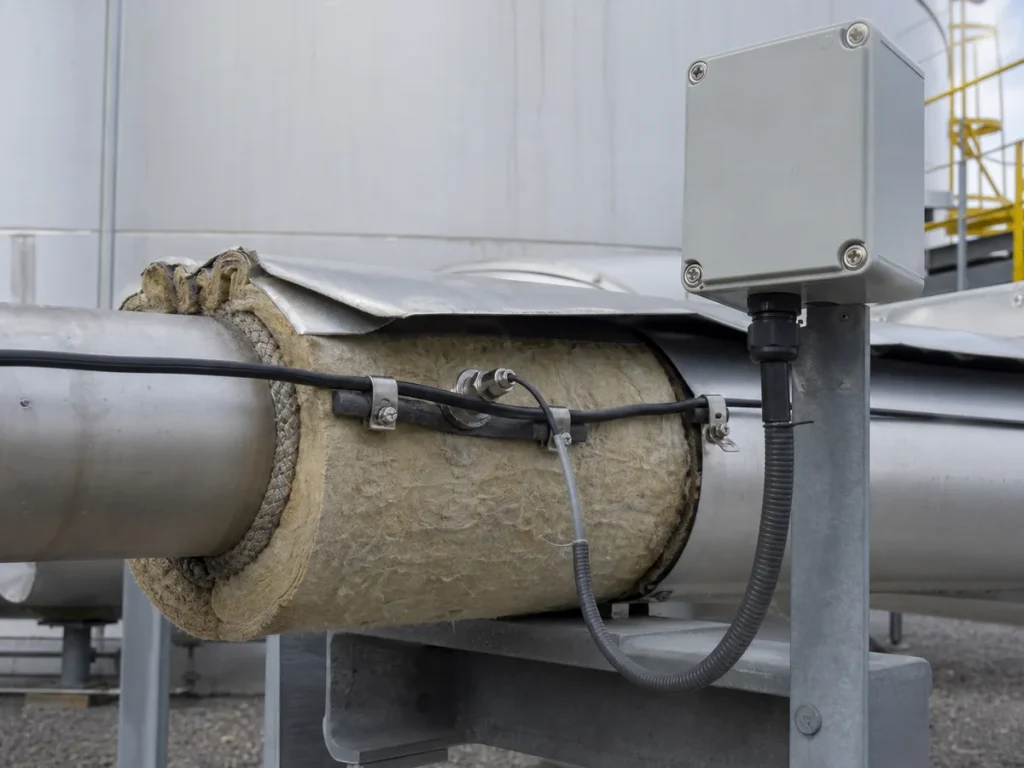
Electric heat tracing is widely used to protect short pipe runs, valves, instruments, small tanks, outlets, and transfer lines from cooldown or freezing. It can also be designed for tank heating, but the circuit layout, heat output, temperature classification, insulation, weatherproofing, electrical area classification, controller, sensor placement, overtemperature protection, and power reliability need careful engineering.
Heat tracing should not be concealed as an inaccessible cable under damaged cladding. The installation should provide traceable circuit identification, accessible junction boxes, proper grounding, insulation resistance testing, controller alarms, and a maintenance route. The cable must be selected for the actual pipe or tank temperature and for the possible fault condition, not just normal ambient weather.
Insulation Has Several Jobs
Insulation reduces heat loss and helps make heating duty more predictable. It can also reduce surface temperature exposure for people, control condensation on cold service, protect against weather, and reduce solar-driven temperature variation. However, insulation thickness and material should be selected for thermal performance, operating temperature, fire requirements, moisture resistance, mechanical durability, jacket system, maintenance access, and the service environment.
Shell, roof, nozzles, manways, supports, valves, and piping all create thermal bridges. Leaving these details unaddressed can increase heat loss, create condensation points, or cause local overheating. Conversely, sealing every opening without considering drainage can trap water. Good insulation design includes expansion joints, support details, removable boxes where equipment needs service, sealed penetrations, drainage paths, and a repairable weather jacket.
Corrosion Under Insulation
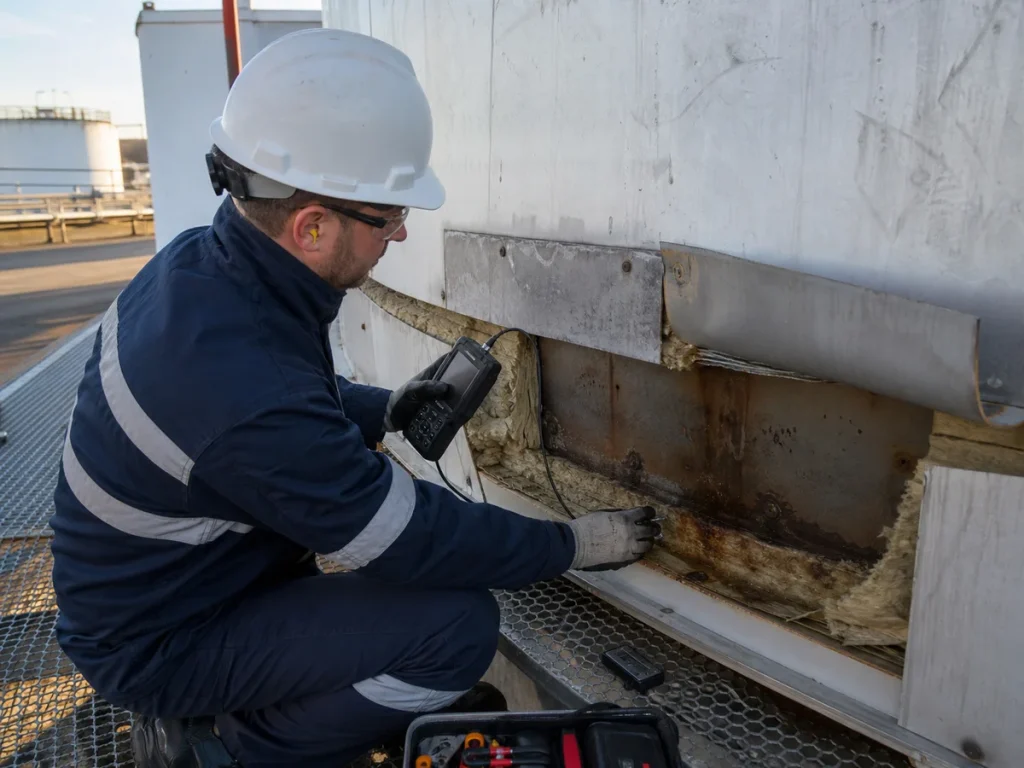
Insulation can hide a corrosion mechanism known as corrosion under insulation, or CUI. Water can enter through damaged cladding, poorly sealed seams, failed mastic, roof runoff, open penetrations, damaged removable covers, or condensation. Once wet insulation stays against the steel, corrosion may progress without visible external evidence. The risk is influenced by temperature cycling, coating condition, chlorides or other contaminants, insulation material, weather exposure, and the time that moisture remains trapped.
Inspection planning should identify susceptible areas: lower shell bands, nozzles, pipe supports, ladders, platform attachments, insulation terminations, removable covers, roof-to-shell interfaces, and locations with repeated washdown or condensation. Visual checks of cladding condition should be combined with targeted insulation removal, thickness measurement, and repair records. A clean external jacket is not enough evidence that the steel behind it is sound.
Temperature Measurement and Controls
Temperature control starts with representative measurement. A single temperature element near a coil may report a hot local zone while the bulk liquid remains cold. A sensor near the shell may be influenced by heat loss rather than actual product temperature. Depending on tank size, product behavior, and heating method, the system may need multiple sensors, level-dependent logic, recirculation, mixing, or a defined procedure for confirming bulk temperature.
The control philosophy should describe normal control, high-temperature alarm, high-high trip, sensor failure, loss of heat medium, power loss, low-level protection for exposed heaters, emergency stop, and restart. For flammable liquid service, temperature rise can affect vapor pressure and venting demand. Heating changes should therefore be reviewed against the tank’s roof, venting, and emergency vent arrangements, not only against the heater nameplate.
Mixing, Recirculation and Stratification
Heating a viscous liquid from one small location may create a hot layer or tunnel while much of the inventory remains cold. If the product allows it, a mixer, recirculation loop, or controlled transfer circulation can improve temperature uniformity. That additional equipment has its own requirements: suction location, pump minimum flow, mixing energy, nozzle loads, support, seals, cleaning, maintenance, and operating interlocks.
When a heating system is added to an existing tank, do not ignore the connected pipework. Thermal expansion, additional valve weight, new insulation, and recirculation piping can change nozzle loads. The project should include the tank nozzle, pipe support, and access interfaces so the shell is not used as an unintended pipe support.
Safety and Maintenance Controls
Hot surfaces, steam leaks, hot condensate, electrical faults, thermal expansion, overheated product, and work under insulation all require controlled maintenance. Exposed hot lines around platforms and access routes should be insulated or guarded as required by the applicable safety rules. Before opening a coil circuit, a heat-trace junction box, or insulated section, teams should isolate energy, confirm cooldown where needed, manage residual pressure and condensate, and consider the stored-product hazards.
For electrical heating in hazardous locations, equipment selection and installation must match the area classification and applicable electrical code. For any heated flammable-liquid tank, the project should review ignition sources, bonding and grounding, automatic temperature limits, alarms, shutdown actions, ventilation, and response to loss of control. Exact requirements depend on the jurisdiction and service; they should be set by the competent project and safety authorities.
EPC Deliverables and Commissioning
Heating and insulation packages often span mechanical, process, electrical, instrumentation, piping, civil, and operations scopes. Handover should include heat-loss and warm-up basis, heating medium data, coil or jacket drawings, insulation and cladding specification, trace circuit schedule, panel drawings, sensor locations, setpoint register, alarm and trip logic, condensate scheme, relief and venting review, pressure tests, electrical tests, commissioning records, operating procedure, and maintenance plan.
Commissioning should demonstrate more than a hot pipe. The team should verify temperature measurement, controller action, high-temperature protection, heat-medium isolation, trap and condensate performance, trace-circuit insulation resistance, weatherproof closures, jacket or coil tightness, accessible maintenance points, and product response during controlled warm-up. Final drawings must include field changes made during construction.
Storage Tank Heating and Insulation Checklist
- Define the product temperature band, quality limits, viscosity or freeze behavior, and acceptable heating rate.
- Calculate steady holding duty and credible warm-up, low-level, ambient, and shutdown cases.
- Select steam, hot water, thermal oil, jacket, coil, or electric heating for the actual duty and maintenance capability.
- Coordinate tank material, coating, gaskets, and seals with the liquid and the thermal cycle.
- Design steam supply, condensate drainage, trapping, isolation, supports, and warm-up controls as one circuit.
- Specify heat-trace circuits, sensors, controllers, grounding, weatherproofing, electrical classification, and overtemperature protection.
- Detail insulation, cladding, terminations, removable covers, drainage, penetrations, and thermal bridges.
- Include CUI risk locations in inspection plans and repair damaged weather jackets promptly.
- Review venting, temperature alarms, high-high shutdown, and product vapor behavior for the heated condition.
- Check piping supports, thermal expansion, access platforms, and nozzle loads after adding heating or recirculation equipment.
- Commission with documented temperature, control, condensate, electrical, and tightness tests before normal operation.
Key Takeaway
Reliable tank heating is not simply a coil, a steam valve, or a heat-trace cable. It is a coordinated thermal system that protects product condition while controlling temperature, pressure, vapor, hot surfaces, energy use, and corrosion risk. Projects that define the operating cases early and connect heating, insulation, controls, venting, inspection, and maintenance will operate more predictably and avoid expensive cold-product, overheating, and corrosion-under-insulation failures.