
Industrial storage tank selection is rarely a simple purchasing decision. A tank that looks adequate on a datasheet can become expensive or risky when the stored medium, foundation, access, temperature range, corrosion profile, and project schedule are evaluated together. For owners, EPC contractors, and environmental engineering teams, the right tank choice starts before a quotation is requested.
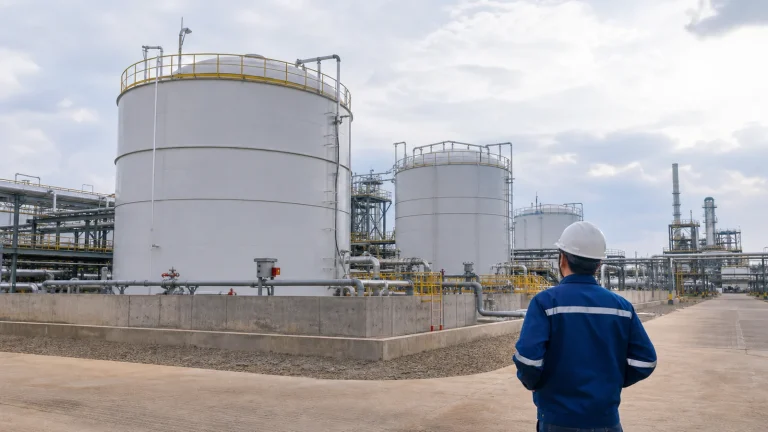
This guide outlines the main engineering factors that should be reviewed when selecting industrial storage tanks for process plants, wastewater treatment systems, biogas facilities, chemical storage areas, mining projects, food processing plants, and other infrastructure applications. It is intended as a practical first-pass checklist for project planning, not as a replacement for project-specific code review or professional engineering design.
1. Start With the Stored Medium
The stored medium drives almost every tank decision. Water, wastewater, sludge, chemicals, leachate, digestate, fuel, and process liquids can have very different impacts on material choice, coating systems, venting, secondary containment, and inspection access. A complete tank selection brief should define not only the liquid name but also its operating concentration, pH, chloride level, solids content, temperature, density, vapor characteristics, and any foreseeable variation during operation.
For wastewater and environmental projects, the stored medium may change over time as upstream processes are adjusted. Equalization tanks, chemical dosing tanks, sludge holding tanks, and digestate tanks should therefore be reviewed for both normal and upset conditions. A tank that handles clean process water may not be suitable for acidic wastewater, high-chloride streams, abrasive suspended solids, or biological gas generation.
2. Match Tank Material to Corrosion and Service Conditions
Common industrial tank materials include carbon steel, stainless steel, glass-fused-to-steel, bolted coated steel, fiberglass reinforced plastic, polyethylene, and reinforced concrete. Each material has a valid application range, but none is universally best.
Carbon steel remains common for large above-ground storage where strength, fabrication flexibility, and cost efficiency are important. However, it usually requires a coating or lining system when corrosion risk is significant. Stainless steel can perform well in hygienic, corrosive, or high-durability applications, but the grade must be selected carefully; the wrong stainless grade may still suffer pitting or crevice corrosion. Glass-fused-to-steel tanks can be attractive for municipal water, wastewater, leachate, and anaerobic digestion projects because they combine modular installation with strong corrosion resistance. FRP and plastic tanks can work well for many chemicals, but mechanical strength, UV exposure, temperature limits, and nozzle loading require close review.
The correct question is not simply, “Which material is cheaper?” A better question is: which tank system provides acceptable lifecycle cost under the actual chemical, mechanical, environmental, and maintenance conditions of the site?
3. Size Capacity Around Operation, Not Only Peak Volume
Tank capacity is often calculated from flow rate and retention time, but practical operation requires more detail. Engineers should separate working volume, freeboard, dead storage, emergency margin, maintenance allowance, and expansion capacity. In wastewater and process applications, the tank may need to buffer flow peaks, equalize concentration changes, support batch operation, or allow downstream equipment to keep running during maintenance.
Over-sizing can waste capital and land area, but under-sizing creates operational instability. When tanks support dosing, equalization, sludge holding, or biogas feedstock preparation, volume should be evaluated with the control philosophy, pump capacity, operator response time, and expected future flow growth.
4. Review Foundation Conditions Early
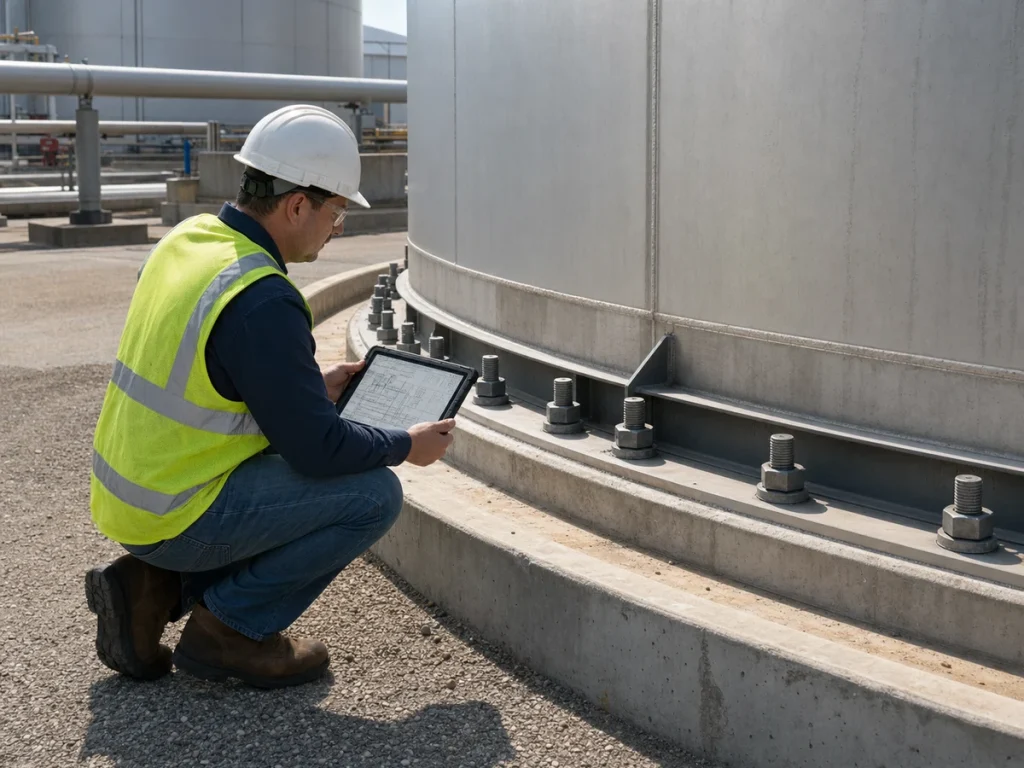
The tank foundation is one of the most common areas where early assumptions turn into project delays. Soil bearing capacity, settlement tolerance, seismic conditions, groundwater level, frost depth, wind load, tank diameter, bottom design, and anchor requirements all affect foundation design.
Large storage tanks impose ring loads and hydrostatic loads that must be transferred safely into the ground. Uneven settlement can damage shell plates, roof structures, nozzles, pipe connections, and coatings. For bolted tanks, anchor bolt layout and leveling precision also influence installation speed and long-term performance. For welded tanks, base plate preparation and weld access must be considered before civil works are finalized.
Foundation design should be coordinated before procurement reaches a late stage. Otherwise, the civil contractor, tank supplier, and EPC team may discover too late that anchor patterns, embedded plates, sump details, or containment slopes do not match.
5. Do Not Treat Nozzles and Piping as Accessories
Nozzle orientation, nozzle size, flange rating, manway location, venting, overflow arrangement, drain position, sampling points, and instrumentation ports should be reviewed as part of the tank selection process. These details determine whether the tank can be integrated cleanly into the plant layout.
Pipe stress is also important. Tanks are not designed to absorb unlimited piping loads. Poor pipe support can distort nozzles, damage linings, create leaks, or complicate maintenance. For chemical and wastewater projects, engineers should also verify whether the tank requires mixers, anti-vortex outlets, heat tracing, level transmitters, pressure relief, odor control connections, or gas-safe fittings.
6. Plan for Containment, Access, and Safety
Storage tanks sit inside a wider safety system. Depending on the stored medium and local requirements, the project may need secondary containment, leak detection, spill collection, emergency drainage, foam or fire protection, gas detection, restricted access, fall protection, lightning protection, and grounding.
Access design is equally practical. Operators need safe access for inspection, sampling, cleaning, valve operation, sensor maintenance, roof inspection, and emergency response. Ladders, platforms, handrails, davit systems, roof hatches, side manways, and internal access points should be planned around real maintenance tasks rather than added after layout drawings are already frozen.
7. Connect Tank Selection to EPC Project Execution
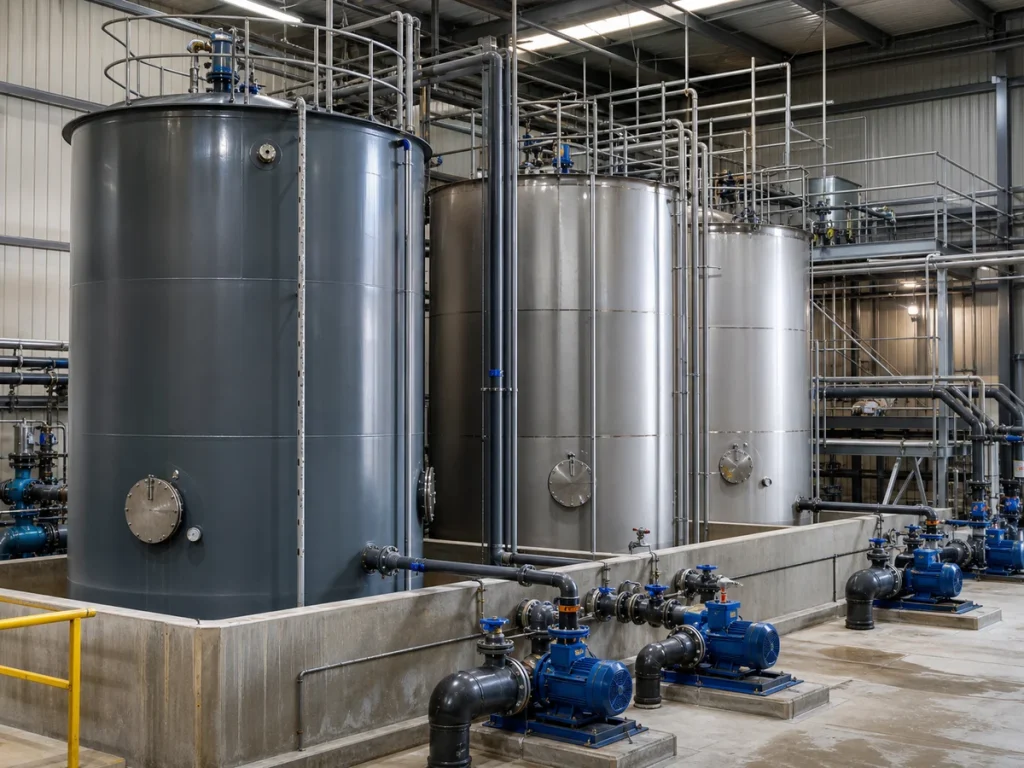
In an EPC project, tank selection affects engineering, procurement, logistics, civil works, installation sequencing, testing, commissioning, and documentation. A modular bolted tank may reduce hot work on site and simplify transport, while a welded tank may offer fabrication flexibility for large custom service. A concrete tank may suit certain civil-heavy projects, while packaged FRP or plastic tanks may shorten procurement for smaller chemical systems.
Lead time should be reviewed early. Large tanks may require material purchasing, fabrication drawings, coating schedules, factory inspection, shipping planning, crane planning, and site assembly windows. If the tank is on the critical path, small specification changes can affect the entire project schedule.
Documentation also matters. Project owners and EPC teams should request design calculations, material certificates, coating data sheets, welding records, inspection and test plans, hydrotest procedures, operation manuals, and maintenance guidance where applicable. These documents support regulatory review, commissioning, future inspection, and asset management.
8. Consider Lifecycle Cost Instead of Purchase Price Alone
The cheapest quoted tank can become expensive if it requires frequent coating repair, difficult cleaning, premature replacement, complex installation, or high maintenance downtime. Lifecycle cost should include procurement, civil works, installation, corrosion protection, inspection access, energy use for mixing or heating, cleaning frequency, spare parts, downtime risk, and end-of-life replacement.
For industrial owners, the best tank is usually the one that fits the process, the site, and the maintenance strategy with the fewest hidden compromises. For EPC contractors, a well-defined tank selection process reduces change orders, interface conflicts, and commissioning surprises.
Practical Tank Selection Checklist
- Define the stored medium, including chemical range, solids, temperature, density, vapor, and upset conditions.
- Select material and lining based on corrosion, mechanical loads, hygiene requirements, and maintenance expectations.
- Separate working volume, freeboard, emergency reserve, dead volume, and future expansion allowance.
- Confirm geotechnical data, settlement tolerance, anchor requirements, seismic and wind loads, and containment design.
- Coordinate nozzles, manways, vents, drains, mixers, instruments, and pipe supports before fabrication drawings are released.
- Plan safe access for inspection, cleaning, sampling, operation, and emergency response.
- Review logistics, installation method, schedule risk, testing requirements, and documentation deliverables.
- Compare lifecycle cost, not just the initial tank quotation.
Conclusion
Industrial storage tank selection is an interface-heavy engineering decision. Material, capacity, foundation, corrosion protection, safety systems, access, and EPC execution all influence whether the tank will perform reliably after commissioning. A disciplined early review helps project teams avoid costly redesign, procurement delays, maintenance problems, and operational risk.
For environmental and industrial infrastructure projects, the most reliable tank specification is the one built from real service conditions, site constraints, and long-term operating needs.